
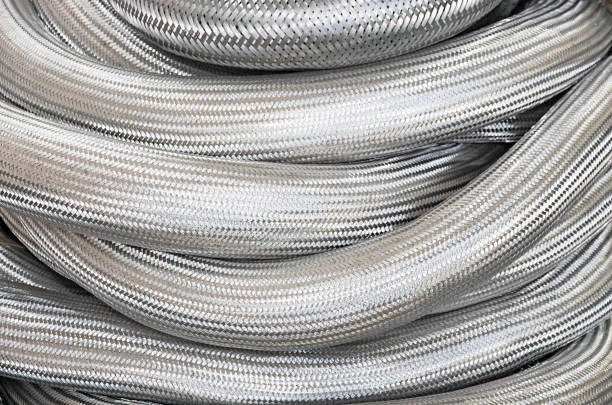
Braided hoses have become a staple in various industries, ranging from construction and automotive to manufacturing and home plumbing. Among the many factors that influence the choice of fluid transfer equipment, economic value remains a top priority. These hoses offer a compelling balance between performance and cost, which makes them an attractive choice for both commercial and residential applications. This article explores the economic advantages of braided hoses by addressing common questions, defining their key features, and outlining their diverse industrial uses.
Frequently Asked Questions (FAQ)
1. Why are braided hoses considered an economical choice?
Braided hoses offer long service life, minimal maintenance, and high durability, which reduces the need for frequent replacements and repairs. This leads to significant cost savings over time.
2. Are there different materials used in braided hoses that affect price?
Yes. Braided hoses are commonly made with stainless steel, nylon, or polyester braiding, each offering different levels of flexibility, pressure resistance, and cost-effectiveness. Stainless steel, for example, may cost more initially but lasts longer.
3. How does installation cost compare to other types of hoses?
Braided hoses are generally easy to install, often requiring fewer fittings or connectors, which reduces labor and component costs. Their flexibility also simplifies routing in tight spaces.
4. Can braided hoses reduce downtime in industrial settings?
Absolutely. Their robust construction minimizes failures, which helps maintain operational continuity and lowers the risk of expensive shutdowns.
5. Are there long-term savings beyond the initial purchase price?
Yes. While some braided hoses may have a slightly higher upfront cost, their resistance to wear, pressure, and corrosion results in fewer replacements, less labor, and reduced system failures over time.
What Are Braided Hoses? Definitions and Key Features
Braided hoses are flexible tubes reinforced with a woven mesh layer, typically made from stainless steel, nylon, or polyester. This braided layer enhances the hose’s structural integrity and enables it to withstand higher pressure levels compared to unreinforced hoses. The inner tubing can be made of rubber, silicone, PVC, or PTFE, depending on the specific application.
Some defining characteristics of braided hoses include:
- Pressure Resistance: The braided reinforcement allows the hose to handle higher internal pressures.
- Flexibility: Despite the added strength, these hoses remain flexible, making them ideal for tight or complex routing.
- Durability: The braided exterior protects the inner hose from abrasion, punctures, and wear.
- Corrosion Resistance: Especially true for stainless-steel-braided options, which are ideal for harsh environments.
- Aesthetic Value: In consumer applications, braided hoses often provide a clean, professional look.
These features make braided hoses reliable and long-lasting, contributing to their overall economic value.
Common Uses and Industrial Applications
Braided hoses are used in a wide range of applications, many of which require a balance between durability and affordability. Their design allows for high performance under pressure without driving up operational costs. Below are some of the most common areas where these hoses are in demand:
Plumbing and Water Supply
In home and commercial plumbing, braided hoses connect faucets, toilets, and washing machines to the water supply. Their resistance to pressure surges and corrosion ensures a longer lifespan than traditional rubber hoses.
HVAC Systems
Heating, ventilation, and air conditioning units use braided hoses to transport refrigerants or condensates. Their flexibility and heat resistance make them cost-efficient for tight installations and prolonged use.
Automotive and Transport
Vehicles use braided hoses in brake systems, fuel lines, and cooling systems. These applications benefit from the strength and leak resistance of braided hoses, which contribute to vehicle safety and reduce the cost of maintenance.
Manufacturing and Machinery
In factories and workshops, braided hoses transport liquids and gases in machinery and automated systems. Their durability minimizes interruptions in production, which saves both time and money.
Chemical and Pharmaceutical Industries
Braided hoses made with PTFE liners are resistant to aggressive chemicals, making them suitable for laboratories and processing plants. Their longevity reduces the frequency of replacements and disposal costs.
Economic Value: Why Braided Hoses Make Financial Sense
From an economic standpoint, braided hoses deliver high value in several ways:
- Lower Maintenance Costs: Their robust design reduces the likelihood of leaks and ruptures, which decreases the need for frequent checks or replacements.
- Extended Service Life: The combination of flexible tubing and a braided shield ensures they withstand both internal and external stresses over time.
- Reduced Downtime: Reliable performance in high-pressure and high-temperature environments ensures that equipment and systems run smoothly, avoiding expensive interruptions.
- Material Efficiency: Manufacturers can select the most appropriate material (e.g., stainless steel for corrosion resistance, polyester for lightweight applications) based on their cost-performance requirements.
- Scalable Options: Braided hoses come in various lengths, diameters, and material combinations, making them cost-effective for both small-scale repairs and large-scale industrial setups.
Moreover, in B2B procurement, the long-term savings braided hoses offer make them a competitive solution. Many suppliers offer volume pricing or bundled kits, further reducing unit costs and streamlining supply chains.
Conclusion
In today’s economy, choosing the right components for fluid transport systems involves more than just finding the cheapest option. It’s about selecting products that provide long-term reliability, safety, and performance without inflating operational budgets. Braided hoses meet all these criteria. Their resistance to pressure, wear, and corrosion makes them a smart investment across multiple industries.
By minimizing maintenance needs and maximizing durability, braided hoses stand out as an economical solution in both commercial and residential settings. Whether used in construction, automotive, plumbing, or manufacturing, their cost-efficiency continues to support high-performance systems at lower total costs.
If your goal is to optimize performance while managing expenses, braided hoses offer the ideal combination of strength and savings.
Would you like a shorter version for a product page or catalog listing as well?
IFAN International Standards
To meet global quality demands, IFAN HDPE pipes follow a wide range of international standards, such as ASTM D3035, ISO 4427, EN 12201, and GB/T 13663. These standards define the pipe’s strength, durability, and safety. Moreover, IFAN complies with DIN 8074/8075, AS/NZS 4130, JIS K6760, BS 6572, and CSA B137.1, making their products suitable for water, gas, and industrial systems worldwide. Because IFAN meets all these trusted certifications, users can confidently choose IFAN for reliable performance in any environment.
Contact Us
If you have any questions about cold taps or need help selecting the right model, feel free to reach out to our team. We offer expert advice and support tailored to your industry and application.
IFAN is a Chinese manufacturer of plastic pipes, fittings and valves with 30 years of experience. If you are interest in IFAN copper fittings, copper valves, plastic pipes and fittings, please contact us. IFAN offers you a variety of standard pipes to meet your specific needs. Click below to learn more about IFAN’s wide range of affordable and cost-effective valve products and piping system related products.
We will reply your email or fax within 24 hours.
You can call us at any time if there is any question on our production.
For more information,pls visit our webside https://www.waterpipefactory.com/
Pls Mailto: [email protected]
Whatsapp: + 86 152 1588 7738