
Introduction
Reinforced braid hoses are widely used across industries because they combine flexibility, durability, and strong pressure resistance. Their production requires precision because each stage of processing influences the hose’s strength, flexibility, and lifespan. Understanding the processing of reinforced braid hoses is essential not only for manufacturers but also for distributors, installers, and end-users who want to ensure safety and performance in demanding environments. This article explores the key steps of processing, answers common questions, defines essential features, highlights uses across industries, and summarizes their importance.
FAQ About Reinforced Braid Hoses
1. What materials are used in processing reinforced braid hoses?
Reinforced braid hoses often combine rubber, PVC, polyurethane, or silicone for the inner and outer layers, while stainless steel or synthetic fibers like polyester or nylon are used in the braided reinforcement. The material choice depends on the intended application.
2. How are reinforced braid hoses manufactured?
The process involves extruding an inner tube, adding a braided reinforcement using steel wires or fibers, and applying an outer protective layer. Advanced machinery ensures that the braiding is tight and evenly distributed to handle pressure effectively.
3. Why is the braiding process important?
The braiding gives the hose its strength and pressure resistance. Without reinforcement, hoses may collapse, bulge, or burst under high-pressure conditions. The weaving pattern of the braid directly influences performance.
4. Can reinforced braid hoses be customized during processing?
Yes, manufacturers can adjust dimensions, materials, and reinforcement density to meet specific needs. Some industries require specialized coatings, chemical resistance, or higher flexibility.
5. What quality checks occur during processing?
Typical quality control steps include pressure testing, leakage inspection, dimensional accuracy verification, and material durability checks. These tests ensure hoses meet international standards and customer requirements.
Definition and Characteristics of Reinforced Braid Hoses
Their defining feature is the braided reinforcement layer that provides mechanical strength while maintaining flexibility.
Key characteristics include:
- High tensile strength thanks to braided steel wires or synthetic fibers.
- Excellent flexibility, which makes installation easier in tight spaces.
- Resistance to pressure fluctuations, preventing bursts or leaks.
- Durability in harsh environments, as many hoses withstand abrasion, oils, and chemicals.
- Variety of material choices, including PVC, rubber, and silicone, to match different industries.
Processing of Reinforced Braid Hoses
The processing of reinforced braid hoses involves several stages:
- Material Preparation
High-quality raw materials are selected for the inner tube, reinforcement braid, and outer cover. The choice depends on the hose’s application, such as food-grade silicone for beverage lines or stainless steel braid for high-pressure hydraulic systems. - Extrusion of the Inner Tube
The process begins with extruding the inner tube. This tube forms the main passage for fluids or gases. Precision is critical because the inner layer determines flow efficiency and resistance to the transported substance. - Braiding Reinforcement
Next, braiding machines wrap stainless steel wires or synthetic fibers around the tube. The density and pattern of the weave control the hose’s strength and flexibility. A tighter braid usually increases pressure resistance but reduces flexibility. - Application of the Outer Cover
Once braided, the hose receives an outer protective layer, which shields against external factors like abrasion, chemicals, and UV exposure. This cover may be extruded rubber, PVC, or another material depending on the target use. - Curing and Heat Treatment
For rubber-based hoses, curing stabilizes the material and enhances durability. Heat treatment may also improve bonding between layers. - Testing and Quality Control
Every hose undergoes rigorous testing, including burst tests, bending tests, and chemical resistance checks. These ensure the hose can handle real-world conditions safely. - Cutting and Assembly
After passing inspections, hoses are cut to specific lengths and may be fitted with end connections like couplings or fittings. This step tailors them for immediate use in different systems.
The precision of each processing stage ensures the final product meets safety and efficiency standards.
Common Uses and Industry Applications
Reinforced braid hoses are versatile and find applications in many fields:
- Automotive Industry
Used in fuel lines, brake systems, and cooling systems due to their ability to withstand high pressure and temperature variations. - Construction and Industrial Plants
Widely applied for compressed air, hydraulic systems, and chemical transport. Their robustness ensures safety in demanding environments. - Food and Beverage Industry
Food-grade reinforced hoses made of silicone or PVC are used for transferring liquids in breweries, dairies, and water processing plants. - Medical and Pharmaceutical Applications
Specially processed reinforced hoses maintain hygiene standards for transporting medical gases or fluids. - Agriculture and Irrigation
Durable reinforced hoses are essential for irrigation pumps, pesticide spraying, and water delivery systems. - Household and Domestic Use
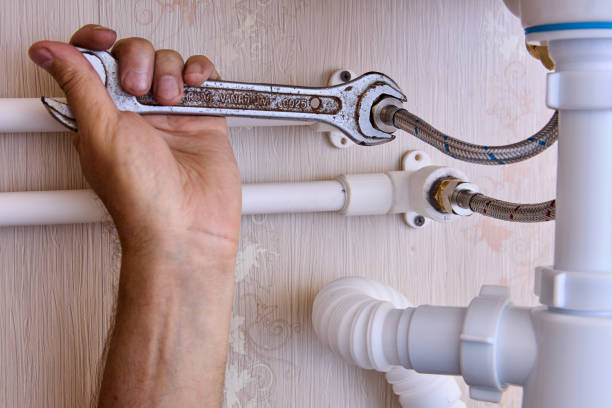
Flexible braided hoses connect faucets, dishwashers, and washing machines, ensuring reliable water supply in homes.
Each industry benefits from the hose’s balance between strength and flexibility, achieved through careful processing.
Conclusion
Reinforced braid hoses play a vital role in modern industries by providing safe, flexible, and strong fluid transport solutions. Their processing involves several precise steps, from material preparation and tube extrusion to braiding, outer covering, curing, and quality testing. These stages ensure the hose delivers both strength and reliability. By understanding their processing, industries and users can better appreciate why reinforced braid hoses remain the preferred choice across automotive, construction, food, medical, and household applications.
IFAN is a Chinese manufacturer of plastic pipes, fittings and valves with 30 years of experience. If you are interest in IFAN copper fittings, copper valves, plastic pipes and fittings, please contact us. IFAN offers you a variety of standard pipes to meet your specific needs. Click below to learn more about IFAN’s wide range of affordable and cost-effective valve products and piping system related products.
We will reply your email or fax within 24 hours.
You can call us at any time if there is any question on our production.
For more information,pls visit our webside https://www.waterpipefactory.com/
Pls Mailto: [email protected]
Whatsapp: + 86 152 1588 7738