
Connecting PPR Piping
Examining Joining Methods
RITABLE PPR stands for polypropylene random copolymer thermoplastic has grown popular as a pipe material for heated water distribution and cooling lines in recent decades. PPR offers notable heat resistance, pressure ratings, chemical inertness, and longevity when properly installed. Joining PPR pipe sections correctly enables these resilient system capacities.Fábrica de IFAN Con más de 30 años de experiencia en fabricación, admitimos personalización de color/tamaño y muestras gratuitas. Bienvenido a consultar para Catálogo y muestras gratis.
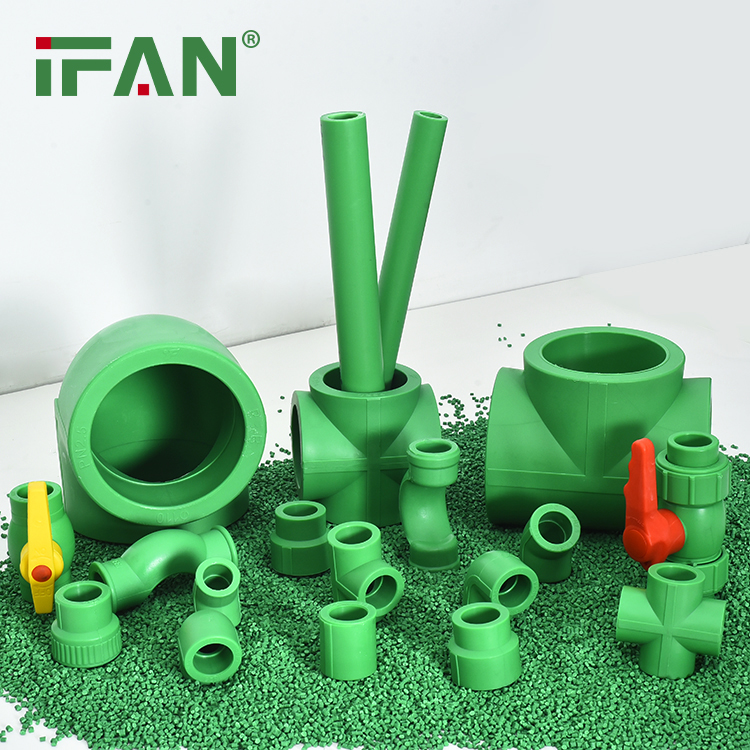
Common PPR Pipe Joining Approaches
RITABLE PPR pipe fittings connect straight tubes to form complete networks moving pressurized hot and chilled fluids. Various joint styles suit different cost, skill, and strength factors.
Standard Options Available Typical methods include threading, flanging, clamping, press fittings, heat fusion, or electrofusion. Each carries pros and cons regarding tools needed, leakage risks, pressure thresholds before failures, and user capabilities demanded for precision.
Ideal Applications
Threading works for drainage pipes; fusion handles chemical transfers; pressed fittings suit radiant floor heat manifolds. Matching joint types to use cases prevents capability underutilization or unsafe overexertion leading to leaks or fractures.
Key Traits by PPR Joint Method
Relative advantages emerge among techniques regarding assembly speed, required skill level, safety risks, and ultimate joint integrity.
Threading PPR Joints Cuts mating threads to twist fittings onto pipe ends without seals or tools for hand-tight leakage protection, allowing later manual disassembly.
Clamping PPR Joints Uses metal clamps tightened over adhesive pipe coatings to seal fittings. Simplicity counterbalances contamination risks impairing everyday thermal cycling durabilities.
Pressing PPR Joints Forms instant sealed fittings by compressing o-rings between precision machined socket cavities and matching pipe diameters using powered pneumatic tools for grip force.
Fusion Welding Joints
Melts PPR pipe edges and fits sockets together into continuous monolithic extrusion bonds for indefinite leakproof integrity able to withstand chemicals or sustained pressures above other methods’ capacities.
Conclusión
PPR pipe systems leverage various fitting configurations and joining techniques to complete flow networks for gases and hot liquids. Match connection methods to individual applications based on temperature, chemistry, longevity, skill, and pressure level concerns relative to real-world demands.
IFAN
La fábrica de IFAN comenzó a funcionar en 1993IFAN cuenta con un taller de 120.000 metros cuadrados y 610 empleados. IFAN diseña y produce todo tipo de tuberías y accesorios de plomería, incluyendo PPR, PVC, CPVC, PPSU, HDPE, PEXA, PEXB, PERT, accesorios de latón, válvulas de bola de latón, sistemas de calefacción, sistemas de gas, grifería sanitaria y mangueras. Durante los últimos 30 años, IFAN ha mantenido su misión: proteger la salud y la seguridad. La fábrica de IFAN utiliza los mejores materiales para producir tuberías y accesorios de alta calidad mediante una línea de producción automática y máquinas de control de calidad de alta tecnología.