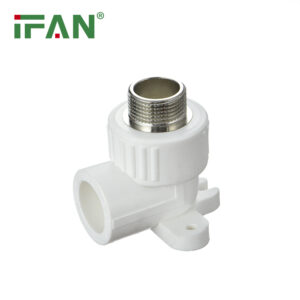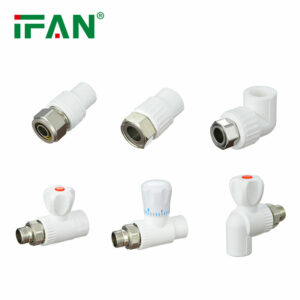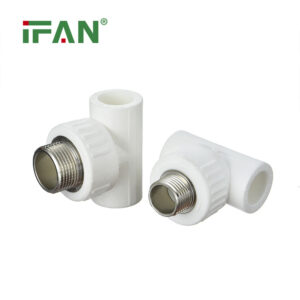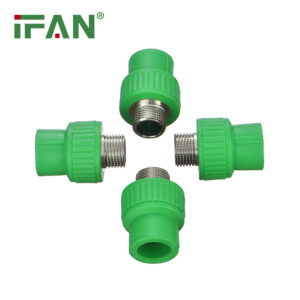
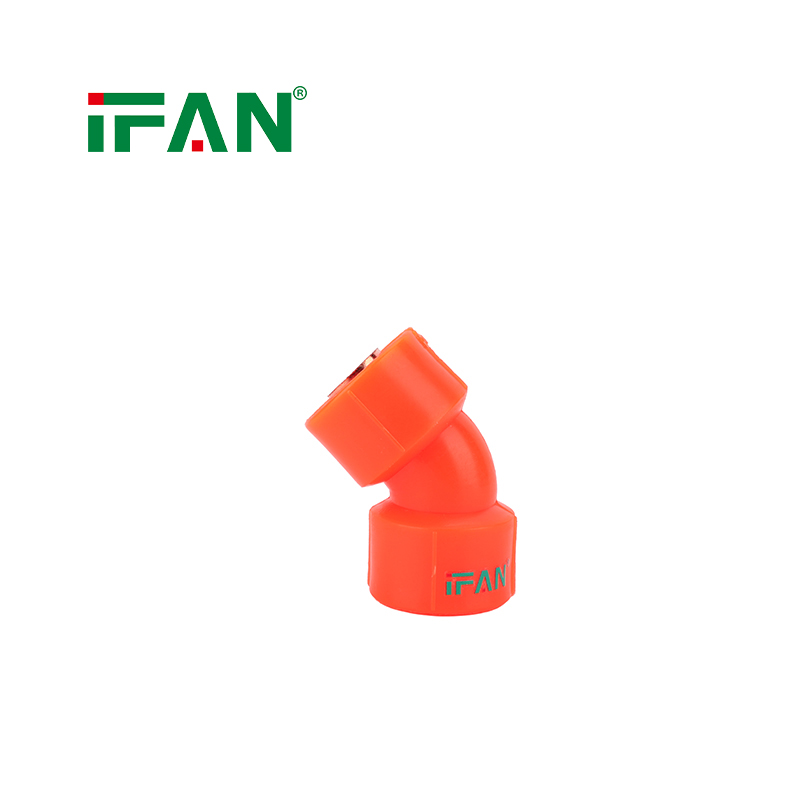
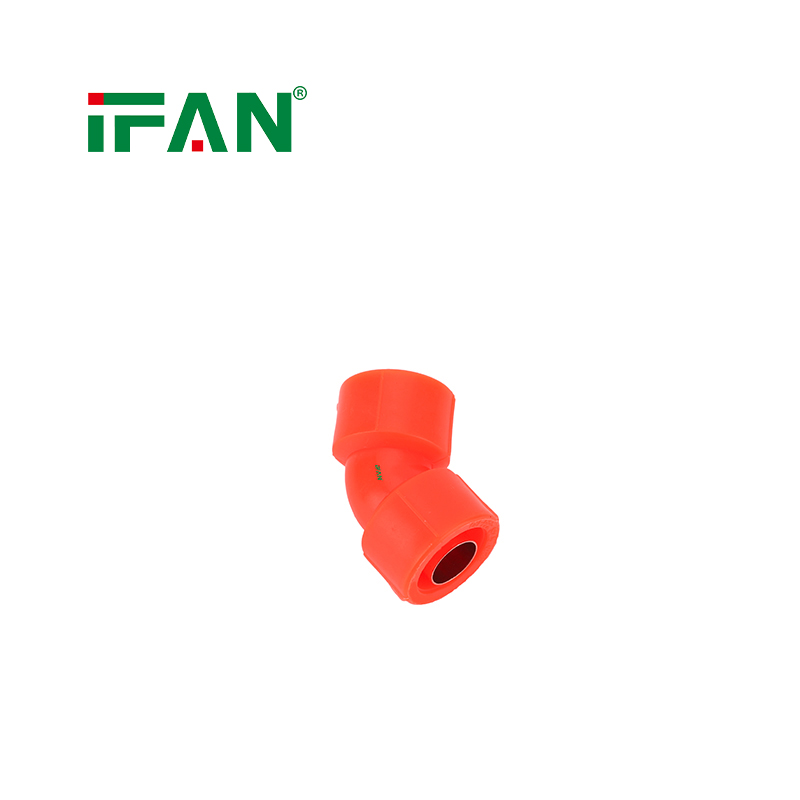
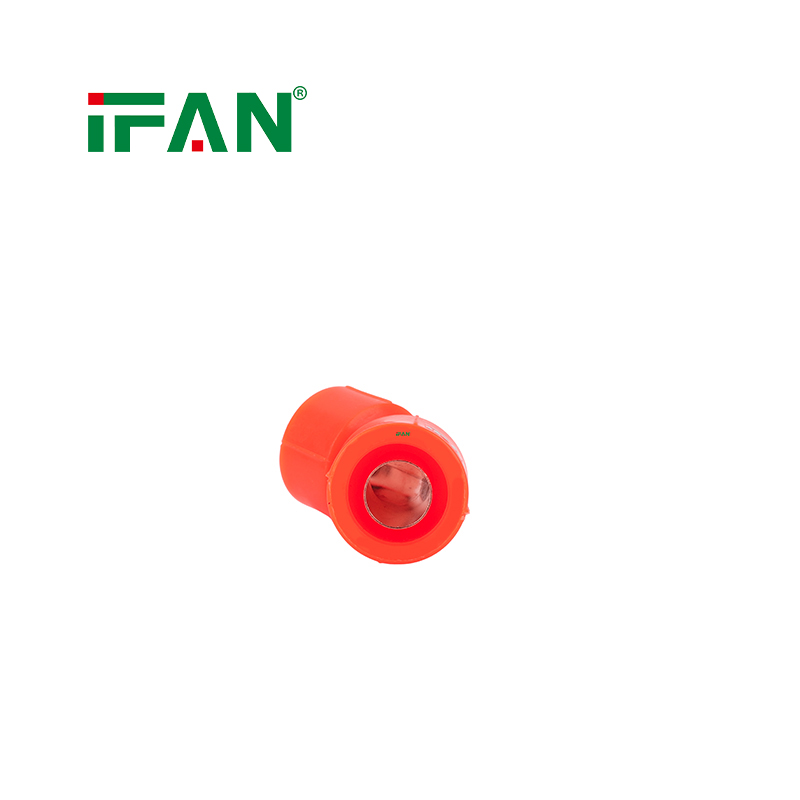
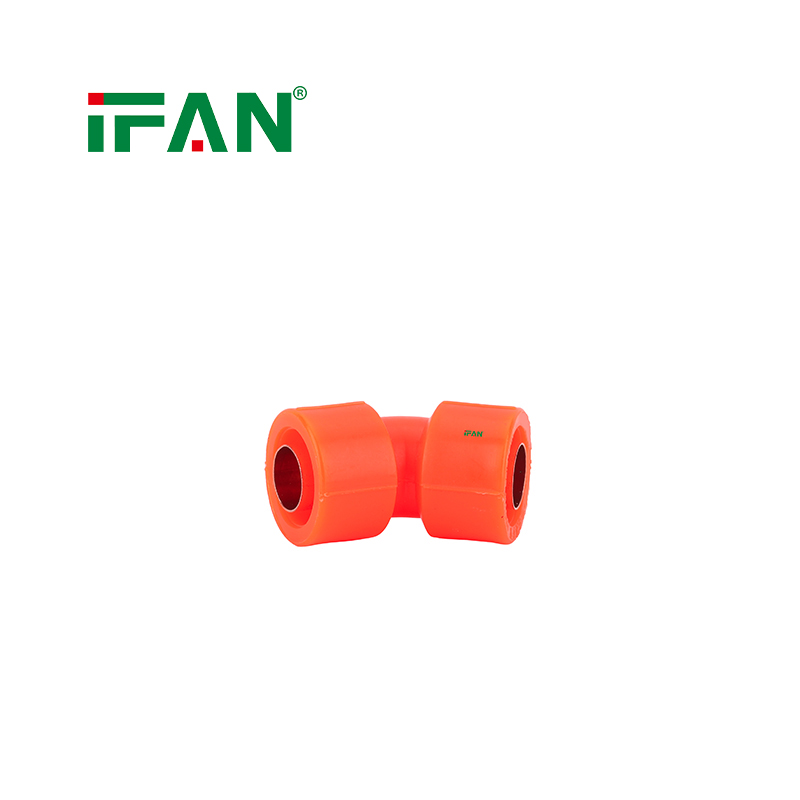
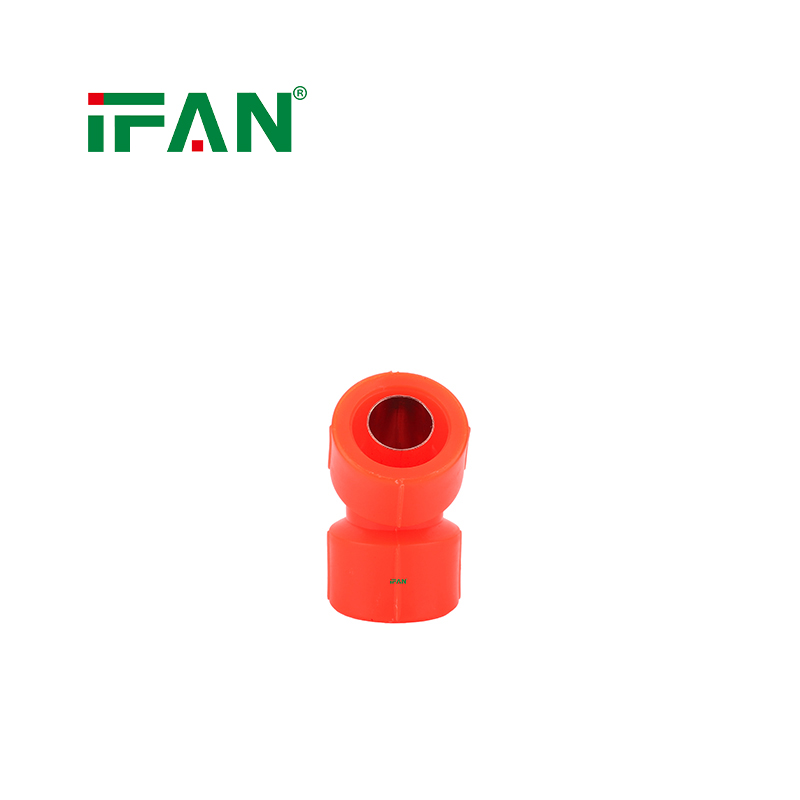
Factory Direct Source IFAN PPR Brass 45° Elbow Fitting
Name: PPR and Copper Fittings
Material: PPR, Copper
Origin: Zhuji, Zhejiang, China
Advantages: High-pressure and high-temperature resistance
Application: Cold and hot water piping
Samples: Free
Delivery Time: 15–30 days
WhatsApp : +8619857948982
Wechat : 8619857948982
Description
Precision in Every Angle: The PPR Brass 45° Elbow Fitting
In modern plumbing and heating systems, directional changes in piping are inevitable. While 90° elbows are common, the 45° elbow plays an equally critical role—offering a smoother transition that reduces pressure loss and minimizes water hammer. When this fitting combines PPR (Polypropylene Random) body with laiton threaded inserts, it achieves a unique balance of durability, thermal stability, and ease of installation.
What Is a PPR Brass 45° Elbow?
A PPR brass 45° elbow is a transitional fitting designed to connect PPR pipes at a 45-degree angle. One end is fused to a PPR pipe via heat fusion (socket weld), while the other end typically features a high-quality brass insert with metal threads (female or male). This hybrid design allows PPR piping systems to interface seamlessly with metal valves, water meters, or existing galvanized/brass plumbing lines.
Key Advantages
Smoother Flow, Lower Resistance.Compared to a 90° elbow, the 45° version creates less turbulence. This is particularly beneficial in high-flow applications such as main water supply lines, industrial coolant circulation, or heated flooring systems. Reduced pressure drop translates to lower pumping costs and quieter operation.
Brass Insert Reliability.The embedded brass threads are engineered to resist stripping and corrosion. Unlike pure plastic threads that can crack under torque, brass provides a secure, leak-proof connection when paired with metal fittings. High-grade CW617N or lead-free brass is often used to comply with drinking water safety standards (e.g., NSF, ACS, WRAS).
Temperature and Pressure Endurance.PPR itself withstands temperatures from -20°C to 95°C and pressures up to 25 bar (depending on pipe SDR rating). The brass insert shares a similar thermal expansion coefficient with PPR, preventing stress fractures during hot-water cycling.
Corrosion and Chemical Resistance.PPR resists most acids, alkalis, and salts, while brass adds excellent resistance to dezincification in aggressive water conditions. Together, they outperform all-metal fittings in many corrosive environments.
Installation Best Practices
Fusion side: Clean and align the PPR pipe and the elbow’s PPR socket. Use a thermal welding machine to heat both surfaces evenly, then join with steady axial force.
Threaded side: Wrap 3–5 layers of PTFE tape or apply liquid thread sealant over the brass threads before screwing onto a metal female/male adapter. Avoid overtightening, which may split the PPR body.
Support: For horizontal runs over 1 meter, provide pipe clips to prevent sagging—this is critical for 45° fittings that lack the self-supporting rigidity of 90° bends.
Applications courantes
Residential plumbing: Shifting pipe angles around obstacles (beams, ducts) without sharp turns.
Radiant floor heating (underfloor heating): Gentle directional changes from manifolds to distribution loops.
Solar water heaters and heat pumps: High-temperature return lines that require moderate directional shifts.
Industrial water treatment: Low-turbulence connections between PPR main lines and threaded instruments.
Why Choose a PPR Brass 45° Over Alternatives?
Vs. all-brass 45° elbow: Lighter, much cheaper, immune to internal scale buildup, and thermally insulating (no sweating).
Vs. all-PPR 45° elbow: Allows direct threaded connection to metal components without a separate transition adapter (saving space and potential leak points).
Vs. push-fit fittings: Fully weldable joint on the PPR side means no hidden O-rings that degrade over time.
Conclusion
The PPR brass 45° elbow is a small but indispensable component that brings flexibility, efficiency, and durability to modern piping. By combining the thermal fusion reliability of PPR with the thread security of brass, it solves the challenge of changing pipe direction smoothly while connecting to metal systems. Whether you are designing a residential hot-water recirculation line or a chemical dosing skid, this fitting deserves a place in your material list—because sometimes, the right angle makes all the difference.
Connecter
IFAN IFAN est un fabricant chinois de tubes, raccords et vannes en plastique fort de 30 ans d'expérience. Si vous êtes intéressé par les raccords en cuivre, les vannes en cuivre, les tubes et raccords en plastique IFAN, n'hésitez pas à nous contacter. IFAN vous propose une variété de tubes standards pour répondre à vos besoins spécifiques. Cliquez ci-dessous pour en savoir plus sur la vaste gamme de vannes et de systèmes de tuyauterie abordables et économiques d'IFAN.
Nous répondrons à votre e-mail ou fax dans les 24 heures.
Vous pouvez nous appeler à tout moment si vous avez des questions sur notre production.
Pour plus d'informations, veuillez visiter notre site Web https://www.waterpipefactory.com
Veuillez envoyer un mail à : [email protected]
WhatsApp : + 86 19857948982
Related products
- Raccord PPR
Coude mâle PPR blanc avec siège
- Raccord PPR
coude 45° PPR blanc
- Raccord PPR
T-shirt blanc en PPR pour homme
- Raccords de tuyauterie PPR verts
Prise mâle PPR