
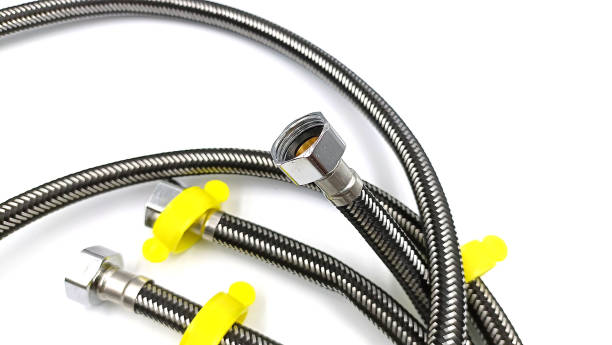
In an era of increasing environmental awareness, industries and consumers alike are seeking sustainable alternatives without compromising performance. Tuyaux tressés en nylon represent a significant step toward eco-friendly fluid transfer solutions, combining durability with environmental responsibility. This article explores the green credentials of nylon braided hoses, their applications, public perception, and the challenges they help overcome in the quest for sustainability.
Basic Features: The Eco-Friendly Design
Nylon braided hoses feature a unique construction that contributes to their environmental profile:
- A core tube made from advanced nylon polymers
- A reinforcing braided layer typically using synthetic fibers
- Lightweight yet durable construction
- Excellent chemical resistance and flexibility
The environmental advantages begin with manufacturing. Producing nylon hoses requires less energy than metal alternatives, and the materials often incorporate recycled content. Their lightweight nature reduces transportation emissions, while their durability ensures longer service life, minimizing replacement frequency and waste generation.
Industry Applications: Green Solutions Across Sectors
Industrie automobile
Manufacturers use nylon braided hoses in fuel lines, brake systems, and coolant applications. The weight reduction contributes to better fuel efficiency, while the material’s resistance to biofuels and alternative fuels supports the transition to greener transportation solutions.
Applications industrielles
In manufacturing plants, these hoses handle hydraulic fluids, lubricants, and compressed air systems. Their corrosion resistance and longevity reduce maintenance needs and prevent fluid leaks that could harm the environment.
Consumer Products
Many household appliances now feature nylon braided hoses in water supply lines and drainage systems. Their reliability prevents water damage and conservation issues associated with leaks.
Énergie renouvelable
In solar thermal systems and heat pumps, nylon braided hoses transport heat transfer fluids efficiently, supporting clean energy infrastructure.
Public Recognition: Growing Environmental Awareness
Consumers increasingly recognize nylon braided hoses as environmentally preferable options. This recognition stems from:
- Understanding of the product’s recyclability
- Appreciation for reduced weight and energy savings
- Trust in manufacturers’ environmental certifications
- Positive experiences with durability and performance
Social media and eco-conscious home improvement communities have helped spread awareness about the environmental benefits of choosing nylon over traditional materials.
Foire aux questions (FAQ)
Q1: Are nylon braided hoses recyclable?
Yes, most nylon braided hoses are recyclable through specialized programs. The nylon material can often be repurposed into new products, though recycling availability varies by region.
Q2: How do they compare to metal hoses in environmental impact?
Nylon hoses typically have a lower carbon footprint in production and transportation due to their lightweight nature and lower energy requirements during manufacturing.
Q3: Do they contain harmful chemicals like BPA?
High-quality nylon braided hoses use food-grade materials that are BPA-free and safe for potable water applications when properly certified.
Q4: What is their lifespan compared to traditional hoses?
With proper installation and maintenance, nylon braided hoses can last significantly longer than rubber hoses, reducing waste from frequent replacements.
Q5: Can they handle extreme temperatures as well as metal hoses?
While temperature ranges vary by specific product, advanced nylon formulations can handle most industrial and residential applications, though extremely high-temperature situations may require specialized solutions.
Résumé
Nylon braided hoses represent a meaningful advancement in sustainable fluid transfer technology. Their environmental benefits span multiple dimensions – from reduced energy consumption in production to decreased transportation emissions and longer service life. Across industries, these hoses support greener operations while maintaining the performance standards that professionals require.
As technology continues to evolve, we can expect further improvements in nylon formulations and manufacturing processes that will enhance both environmental credentials and performance characteristics. The growing public acceptance of these products demonstrates a positive shift toward sustainable choices in industrial and consumer applications.
While challenges remain in recycling infrastructure and consumer education, nylon braided hose clearly offer a more environmentally responsible alternative to traditional materials. Their adoption contributes to broader sustainability goals without compromising on quality or reliability, making them a smart choice for environmentally conscious businesses and homeowners alike.
The future of fluid transfer technology will likely see increased innovation in eco-friendly materials, with nylon braided hoses paving the way for even more sustainable solutions in the years to come.
Contact
IFAN est un fabricant chinois de tubes, raccords et vannes en plastique fort de 30 ans d'expérience. Si vous êtes intéressé par les raccords en cuivre, les vannes en cuivre, les tubes et raccords en plastique IFAN, n'hésitez pas à nous contacter. IFAN vous propose une variété de tubes standards pour répondre à vos besoins spécifiques. Cliquez ci-dessous pour en savoir plus sur la vaste gamme de vannes et de systèmes de tuyauterie abordables et économiques d'IFAN.
Nous répondrons à votre e-mail ou fax dans les 24 heures.
Vous pouvez nous appeler à tout moment si vous avez des questions sur notre production.
Pour plus d'informations, veuillez visiter notre site Web https://www.waterpipefactory.com/
Veuillez envoyer un mail à : [email protected]
WhatsApp : + 86 152 1588 7738