
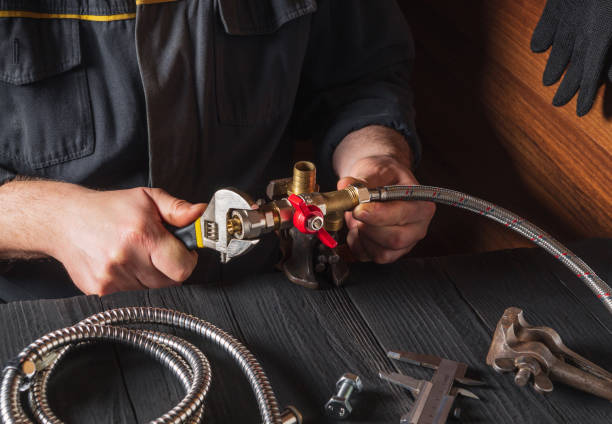
Selecting the right hose is only half the battle; ensuring a secure, leak-proof connection is equally critical for system integrity and safety. Tuyaux tressés en nylon, renowned for their durability and high-pressure capability, demand specific connection methods to fully leverage their performance benefits. A proper connection ensures optimal flow, prevents failures, and maintains the hose’s resistance to abrasion, chemicals, and pressure. This comprehensive guide explores the world of connections for nylon braided hoses, detailing the common types, installation best practices, and key considerations. We will define what makes these hoses unique, answer frequently asked questions, and examine how connection choices impact their use across various industries. Understanding this crucial aspect will empower you to build safer and more reliable fluid and pneumatic systems.
Définition de base et caractéristiques clés
A nylon braided hose is a flexible conduit consisting of a smooth inner tube, typically made from nylon 11 or nylon 12, surrounded by a reinforcing braid of high-tenacity nylon yarn. This construction provides an exceptional balance of strength and flexibility. However, the connection point often represents the potential weakest link in the system. Therefore, the connection must be engineered to complement the hose’s inherent properties.
The characteristics of the hose directly influence connection choices:
- High Pressure Resistance: The braid allows the hose to withstand significant internal pressure. Connections must be equally robust, using mechanical locking mechanisms or permanent bonds that can contain this force without leaking or detaching.
- Flexibilité: While the hose is flexible, the connection is a rigid point. The choice of fitting must account for this transition to avoid stress concentration that could lead to fatigue failure at the hose end.
- Compatibilité des matériaux : The materials of the fittings must be compatible with both the fluid being conveyed and the hose material itself to prevent galvanic corrosion or chemical degradation at the critical connection point.
- Tolérance de température : Connections must maintain their seal and mechanical strength across the same temperature range as the hose, which can be from -40°C to over 120°C depending on the nylon grade.
Utilisations courantes et secteurs d'application
The application dictates the required connection type, emphasizing factors like pressure, vibration, and the need for disassembly.
- Industrie automobile : In fuel, brake, and coolant systems, connections are paramount for safety. Here, crimped fittings are standard. A metal fitting is permanently attached to the hose end using a crimping machine, creating a robust, high-pressure, and vibration-resistant connection that is essential for vehicle reliability.
- Industrial Automation and Pneumatics: For compressed air lines powering tools and machinery, push-to-connect fittings are extremely popular. They allow for quick installation and disassembly without tools, facilitating machine maintenance and reconfiguration. Barbed fittings with constant-tension clamps are also common for lower-pressure air and coolant lines.
- Chemical Transfer: Systems handling chemicals and solvents often use flanged connections or threaded fittings (e.g., NPT, BSPP) made from corrosion-resistant materials like stainless steel. These provide a strong, sealed interface for connecting hoses to pumps, tanks, and other equipment.
- Food and Beverage Processing: In applications requiring hygiene, FDA-compliant quick-disconnect couplings with easy-clean designs are preferred. These allow for rapid dismantling for cleaning and sterilization, while ensuring a leak-proof seal during operation.
- Mobile Hydraulic Equipment: Agriculture and construction machinery use crimped or reusable threaded fittings to connect hoses in hydraulic systems. These connections must withstand high pressure, extreme temperature swings, and constant vibration from the equipment.
Foire aux questions (FAQ)
1. What are the main types of fittings used with nylon braided hoses?
The most common types are push-to-connect fittings for quick assembly in pneumatics, barbed fittings secured with clamps for low-pressure applications, and crimped fittings for permanent, high-pressure hydraulic and automotive systems. Reusable threaded fittings are also an option for some styles, allowing field assembly without special crimping tools.
2. Can I use standard hose clamps with a nylon braided hose?
For low-pressure applications, you can use a barbed fitting paired with a constant-tension clamp (not a worm-drive clamp). However, for medium to high pressures, this is not recommended. The smooth outer surface of the braid does not provide an optimal grip for a clamp, and the connection may fail under pressure or vibration.
3. How do I ensure a leak-proof connection?
First, always select the correct fitting type for your pressure and application. Then, ensure proper installation. For push-to-connect fittings, push the hose in until it bottoms out. For crimped fittings, use the correct die size and follow the manufacturer’s specifications.
4. Is it necessary to use a special tool for connections?
It depends on the fitting type. Push-to-connect and some barbed fittings require no tools. Crimped fittings absolutely require a calibrated crimping machine to ensure a safe and reliable permanent connection. Using pliers or a vise to attempt a crimp will result in an unsafe connection.
5. Can I reconnect a hose after cutting it?
Yes, but only if you use a fitting designed for that purpose. Push-to-connect and reusable fittings allow for this. However, a hose end that was previously crimped cannot be re-crimped. You must cut off the old crimped fitting and install a new one on a fresh section of hose.
Conclusion
In the world of fluid and pneumatic systems, the connection is not just an accessory; it is a fundamental component of performance and safety. Nylon braided hoses offer outstanding properties, but their effectiveness is entirely dependent on a correctly chosen and properly installed fitting. Whether the priority is the quick-disconnect capability for maintenance, the absolute security of a crimped fitting for high-pressure hydraulics, or the hygienic needs of food processing, there is a connection solution designed for the task. Investing time in selecting the right coupling and following precise installation guidelines pays dividends in system reliability, longevity, and safety. Ultimately, a well-connected system ensures that the full performance potential of the nylon braided hose is realized, creating a seamless and efficient link between power and function.
Contact
IFAN est un fabricant chinois de tubes, raccords et vannes en plastique fort de 30 ans d'expérience. Si vous êtes intéressé par les raccords en cuivre, les vannes en cuivre, les tubes et raccords en plastique IFAN, n'hésitez pas à nous contacter. IFAN vous propose une variété de tubes standards pour répondre à vos besoins spécifiques. Cliquez ci-dessous pour en savoir plus sur la vaste gamme de vannes et de systèmes de tuyauterie abordables et économiques d'IFAN.
Nous répondrons à votre e-mail ou fax dans les 24 heures.
Vous pouvez nous appeler à tout moment si vous avez des questions sur notre production.
Pour plus d'informations, veuillez visiter notre site Web https://www.waterpipefactory.com/
Veuillez envoyer un mail à : [email protected]
WhatsApp : + 86 152 1588 7738