
Wire braided hoses represent a critical component in countless industrial and commercial applications, offering an exceptional combination of strength, flexibility, and durability. This guide delves deep into the world of wire braided hoses, exploring their construction, key features, and the vast array of projects they facilitate across multiple industries. We will answer frequently asked questions, examine their fundamental characteristics, and illustrate their diverse applications. Understanding these robust hoses will empower you to select the right type for your specific project requirements, ensuring safety, efficiency, and longevity.
Frequently Asked Questions (FAQ)
What exactly is the wire braiding in these hoses for?
The wire braiding is not merely a cover; it is a critical reinforcement layer. This braid, typically made from high-tensile stainless steel, is woven tightly around the inner tube. Its primary function is to contain high internal pressures, preventing the hose from expanding, bursting, or collapsing under vacuum conditions.
Are all wire braided hoses the same?
No, they are not. Major differences exist in the materials used for the inner tube, the type of wire (e.g., stainless steel, carbon steel), the number of braid layers (single or multiple), and the outer cover. These variations allow manufacturers to tailor hoses for specific media, such as hot water, hydraulic oil, steam, chemicals, or fuels, and for different pressure and temperature ranges.
How do I choose the right hose for my project?
Selecting the right hose requires considering several key project parameters. You must identify the type of media being conveyed, its temperature, the system’s maximum operating pressure, and the required hose length and diameter. Always consult the manufacturer’s specifications to ensure the hose is rated for your application’s specific demands.
What are the signs that a wire braided hose needs replacement?
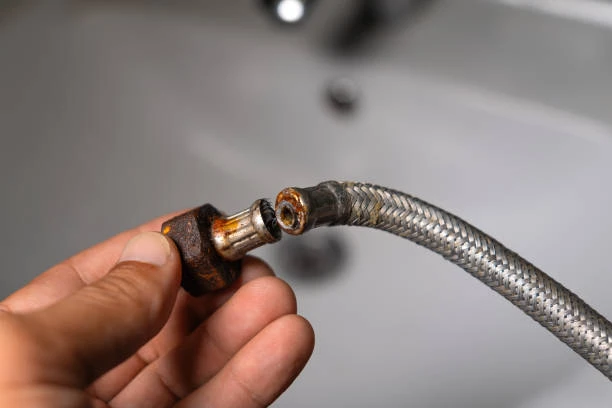
Visible signs of wear include external abrasion, cuts, or cracks in the cover. More critical signs are leaks at the fittings, a swollen or bulging hose body, kinks that do not relax, or any significant reduction in flexibility.
Can these hoses be used for drinking water applications?
Yes, but only specific types are certified for potable water. These hoses feature an inner tube made from a material that is taste- and odor-neutral and complies with relevant health and safety standards, such as NSF/ANSI 61. The standard wire braided hose is not suitable for drinking water unless explicitly certified.
Basic Definition and Key Characteristics
A wire braided hose is a flexible conduit designed to convey fluids, gases, or semi-solids under high pressure. Its construction is a sophisticated multi-layer assembly. At its core lies a seamless synthetic rubber or thermoplastic inner tube, chosen for its compatibility with the specific media. This wire reinforcement provides immense strength. Finally, a rugged outer cover, often made from synthetic rubber, weather-resistant thermoplastic, or another durable material, protects the wire braid from external damage, abrasion, corrosion, and environmental factors.
The key characteristics of these hoses make them indispensable for demanding projects. Their most notable feature is their extremely high pressure rating, which far exceeds that of standard hoses. Despite this strength, they maintain excellent flexibility, allowing for easy routing around obstacles in tight machinery spaces. Furthermore, their construction minimizes elongation under pressure, ensuring efficient and reliable power transmission in hydraulic systems. This blend of brute strength and adaptable flexibility is what sets them apart.
Common Uses and Application Industries
The unique properties of wire braided hoses make them the go-to solution in a staggering variety of projects across numerous industries. In industrial manufacturing and automation, they are the lifeline of hydraulic systems. They transmit powerful hydraulic fluid to operate heavy machinery, injection molding presses, metal stamping equipment, and robotic automation cells. Their ability to handle high pressure and resist impulse fatigue is critical here.
The automotive and transportation sector relies on them extensively. Within vehicles, they serve as power steering hoses, brake lines, and transmission oil cooler lines. The marine industry uses them for fuel lines, lubrication systems, and hydraulic steering on boats and ships. Another major application is in the transfer of chemicals and petroleum products. Their chemical resistance makes them ideal for loading and unloading fuels, solvents, and other aggressive liquids in industrial plants and tanker trucks.
Furthermore, they play a vital role in construction and agriculture. Heavy equipment like excavators, bulldozers, and tractors use numerous wire braided hoses in their hydraulic systems for lifting, digging, and steering. They are also common in water blasting and high-pressure cleaning systems, handling the intense pressure needed for industrial cleaning tasks.
Conclusion
In summary, wire braided hoses are a fundamental engineering component that provides the necessary strength and reliability for high-pressure applications across the global industrial landscape. Their sophisticated construction, combining a flexible inner core with a robust wire reinforcement, creates a product that is both incredibly strong and remarkably adaptable. From powering massive construction equipment to ensuring precise control in automotive brake systems, these hoses enable progress and efficiency in countless projects.
Understanding their design, key characteristics, and the vast scope of their applications is crucial for engineers, project managers, and maintenance professionals. Selecting the correct hose type for a specific project—considering factors like media, pressure, and temperature—is paramount for ensuring operational safety, maximizing performance, and achieving long-term cost-effectiveness. As technology advances, these hoses continue to evolve, offering even greater performance and specialization for the demanding projects of tomorrow. Their role as an enabler of modern industry is both undeniable and indispensable.
Contact
IFAN is a Chinese manufacturer of plastic pipes, fittings and valves with 30 years of experience. If you are interest in IFAN copper fittings, copper valves, plastic pipes and fittings, please contact us. IFAN offers you a variety of standard pipes to meet your specific needs. Click below to learn more about IFAN’s wide range of affordable and cost-effective valve products and piping system related products.
We will reply your email or fax within 24 hours.
You can call us at any time if there is any question on our production.
For more information,pls visit our webside https://www.waterpipefactory.com/
Pls Mailto: [email protected]
Whatsapp: + 86 152 1588 7738