
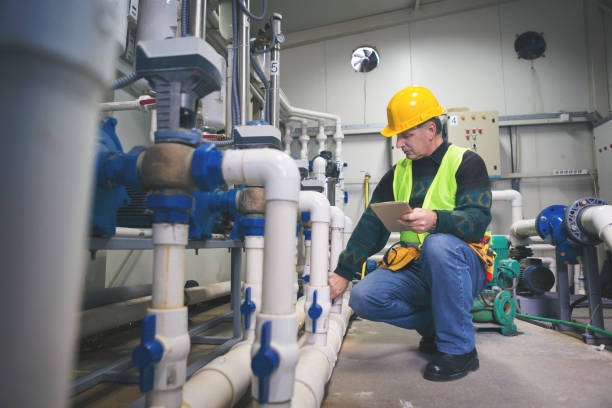
High temperature PPR pipe for industrial chemical transport demands rigorous pressure testing to catch leaks, weak fusions, and stress cracks before aggressive fluids flow through. This professional guide walks you through the exact protocols engineers use to verify system integrity—from test pressure calculations and equipment setup to documentation and safety. You’ll master how to pressure test high temperature PPR pipe for industrial chemical transport in acid lines, hot solvent loops, and steam condensate systems. Whether you manage a chemical plant or a food processing facility, these steps ensure zero downtime and full compliance.
Common Questions About PPR Pressure Testing (FAQ)
Engineers and safety officers ask these five questions before testing high temperature PPR pipe for industrial chemical transport.
- What test pressure should I use?
Apply 1.5 times the maximum operating pressure—30 bar for PN20 systems, 15 bar for PN10. - How long must I hold the pressure?
Maintain full pressure for 2 hours minimum—watch for any drop over 0.2 bar. - Can I use air instead of water?
Never for final test. Air compresses and turns leaks into explosions—use water or inert liquid. - Do I test before or after burying the pipe?
Test above ground first, then after backfill—two tests catch installation damage. - What if pressure drops slightly?
Isolate sections with valves, soap-test joints, and repair any fusion with zero tolerance.
What Is a PPR Pipe System? Definition and Features
PPR (Polypropylene Random Copolymer) pipe systems fuse pipes and fittings into a single, seamless network at 260°C. High temperature PPR pipe for industrial chemical transport uses PPR-CT resin with beta-crystals for 110°C service. Key features include:
- Leak-Proof Fusion: Joints reach 100% pipe strength—no gaskets, no threads.
- Chemical Resistance: Resists acids, bases, and solvents without corrosion.
- Pressure Ratings: PN10 to PN25 handle everything from cooling water to hot caustic.
- Smooth Bore: 0.1 μm roughness prevents buildup and maintains flow.
- Lightweight: A 6-meter length of 63 mm PN20 weighs only 5.8 kg—easy to maneuver.
These traits demand flawless testing to match real-world performance.
Common Uses and Applications
High temperature PPR pipe for industrial chemical transport serves pressure-critical systems:
- Acid Transfer: Sulfuric and hydrochloric lines at 80–110°C.
- Caustic Circulation: Sodium hydroxide loops in pulp mills.
- Solvent Recovery: Hot toluene and acetone lines.
- Steam Condensate: 120°C return lines in food plants.
- Geothermal Brine: High-pressure, high-temperature loops.
Each system needs pressure testing to prevent catastrophic failures.
How to Choose the Right PPR Pipe and Test Equipment: Buying Guide
Specifying high temperature PPR pipe for industrial chemical transport starts with test-ready design:
- Pressure Class: Match PN rating to test pressure—PN20 for 30 bar test.
- Material Grade: Require PPR-CT with 110°C rating and chemical compatibility chart.
- Color Coding: Gray or dark green signals industrial grade—avoid potable colors.
- Test Ports: Install 1/2-inch ball valves every 50 meters for pressure gauges.
- Pump Quality: Use a 50-bar electric test pump with 0.1 bar precision gauge.
- Certification: Verify ISO 15874 Class 5 and pressure-test procedure in manual.
- Documentation Kit: Get pre-printed test certificates and digital pressure loggers.
These choices ensure accurate, repeatable testing.
Step-by-Step Pressure Testing Protocol
Testing high temperature PPR pipe for industrial chemical transport follows a strict sequence:
- Flush the System: Run clean water for 30 minutes to remove debris and air pockets.
- Cap All Ends: Use certified PPR end caps—never duct tape or temporary plugs.
- Fill Slowly: Add water from the lowest point, vent air from the highest point.
- Connect Pump: Attach to a test port with a calibrated 0–60 bar gauge.
- Pressurize Gradually: Raise pressure in 5-bar steps every 10 minutes to avoid shock.
- Hold and Monitor: Maintain test pressure for 2 hours—log readings every 15 minutes.
- Inspect Visually: Walk the line, check every joint for beads of water.
- Depressurize Safely: Open bleed valve slowly—stand clear of the line.
Pass criteria: zero pressure drop, zero visible leaks.
PPR vs. Other Materials: Pressure Test Comparison
See how high temperature PPR pipe for industrial chemical transport performs under test:
| Feature | PPR PN20 | Stainless Steel 316 | PVDF | Carbon Steel (Lined) |
|---|---|---|---|---|
| Test Pressure (PN20 equiv.) | 30 bar | 150 bar | 24 bar | 30 bar |
| Test Medium | Water | Water | Water | Water |
| Time to Pressurize | 10 minutes | 20 minutes | 15 minutes | 25 minutes |
| Leak Detection | Soap solution on fusions | Dye penetrant on welds | Visual on fusions | X-ray on welds |
| Repair Ease | Cut and re-fuse in 10 minutes | Re-weld in 2 hours | Re-fuse in 15 minutes | Re-line in 1 day |
| Cost of Test Failure | $200 (new fitting) | $2,000 (re-weld) | $1,500 (re-fuse) | $5,000 (re-line) |
| Lifespan After Test | 25–It depends on the actual situation. | 15–25 years | 20–40 years | 10–20 years |
PPR wins on speed, cost, and repair simplicity.
Conclusion
High temperature PPR pipe for industrial chemical transport delivers decades of leak-free service—but only pressure testing proves it before startup. The 1.5× operating pressure protocol, combined with meticulous documentation and immediate repairs, eliminates risks in acid, caustic, and solvent lines. From pump selection to final sign-off, every step you take protects workers, equipment, and the environment. For factory-certified high temperature PPR pipes, professional test pumps, and on-site training, visit IFAN’s California distribution center at 5332 Production Dr, Huntington Beach, CA 92649—your West Coast headquarters for pressure-perfect chemical transport systems.
Connect
IFAN is a Chinese manufacturer of plastic pipes, fittings, and valves with 30 years of experience. If you’re interested in IFAN copper fittings, copper valves, plastic pipes, and fittings, please contact us. IFAN offers a variety of standard pipes to meet your specific needs. Learn more about IFAN’s wide range of affordable and cost-effective valve products and piping system-related products.
We will reply to your email or fax within 24 hours. You can call us at any time if there is any question about our production.
For more information,pls visit our webside https://www.waterpipefactory.com/
Pls Mailto: [email protected]
Whatsapp: + 86 152 1588 7738