
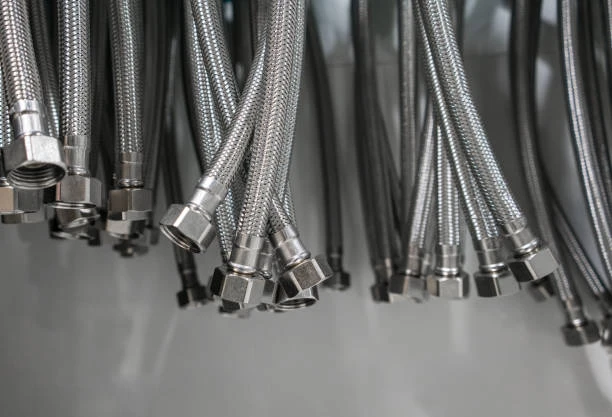
Оплетенные шланги have become indispensable components in modern industrial and domestic systems. These flexible tubes, reinforced with woven metal or synthetic fibers, offer superior durability and pressure resistance compared to traditional hoses. Their versatility spans from automotive cooling systems to chemical processing plants, making them a critical solution for fluid and gas transfer challenges. This article explores the core aspects of braided hose pipes, providing actionable insights for professionals seeking reliable piping solutions.
Common Questions About Braided Hose Pipes (FAQ)
1. What materials are used in braided hose construction?
Braided hoses typically feature three layers: an inner tube (rubber or PVC), a reinforcement layer (stainless steel or polyester fibers), and an outer protective layer. Stainless steel braiding dominates high-pressure applications, while synthetic fibers suit lower-pressure needs.
2. What pressure ratings do these hoses handle?
Pressure capabilities vary significantly. PVC braided hoses often withstand 4-20 bar working pressure, while stainless steel variants handle 60+ bar. Always verify manufacturer specifications for your application.
3. What temperature ranges are suitable?
Standard rubber hoses operate between -20°C to 80°C. Specialized silicone or fluoropolymer-lined hoses extend this range to 260°C for high-temperature environments like steam systems.
4. How do I properly install and maintain them?
Use compatible fittings (crimped or swaged) to prevent leaks. Regularly inspect for kinks, abrasions, or corrosion. Replace hoses showing signs of outer layer wear or reduced flexibility.
5. What distinguishes braided hoses from standard hoses?
The braiding process adds radial strength, preventing expansion under pressure. This reinforcement enables thinner walls while maintaining structural integrity, resulting in lighter, more flexible solutions.
What Exactly Is a Braided Hose Pipe?
A braided hose pipe consists of three fundamental components working synergistically:
- Внутренняя труба: Directly contacts transported media (water, oil, chemicals). Materials vary from PVC for basic water applications to EPDM rubber for oil resistance.
- Армирующий слой: The defining feature – woven metal wires (304 stainless steel) or synthetic fibers wrapped around the inner tube. This layer absorbs pressure stress.
- Outer Cover: Protects against environmental damage. UV-resistant PVC suits outdoor use, while abrasion-resistant rubber covers industrial applications.
The braiding process involves precision weaving machines that interlace wires/fibers at specific angles, creating a mesh that distributes pressure evenly. This construction enables hoses to maintain shape under vacuum conditions (up to -0.8 bar) while resisting kinking.
Key Characteristics and Performance Advantages
Braided hoses deliver measurable benefits across operational parameters:
- Сопротивление давлению: Stainless steel variants withstand 3-10x higher pressures than non-reinforced hoses.
- Temperature Stability: Specialized linings handle extreme heat (steam applications) or cold (cryogenic fluids).
- Химическая стойкость: Fluoropolymer-lined hoses resist aggressive chemicals like acids and solvents.
- Гибкость: Despite reinforcement, modern designs maintain 30-50% better bend radius than armored hoses.
- Vibration Damping: The braiding structure absorbs mechanical vibrations, protecting connected equipment.
These attributes make braided hoses 20-40% lighter than equivalent rubber hoses while offering 5-8 year service life expectancy in demanding environments.
Industrial Applications and Sector-Specific Uses
The versatility of braided hose pipes drives adoption across diverse industries:
Automotive Sector
- High-pressure fuel lines (up to 200 bar)
- Turbocharger cooling systems
- Brake fluid transfer (DOT-approved hoses)
- Air conditioning refrigerant lines
Химическая обработка
- Acid/alkali transfer in corrosion-resistant Teflon hoses
- Solvent delivery in pharmaceutical manufacturing
- Off-gassing ventilation systems
Еда и напитки
- FDA-approved stainless steel hoses for dairy processing
- Sanitary grade PVC hoses for beverage dispensing
- CIP (Clean-in-Place) system components
Construction and Mining
- Concrete pumping hoses with abrasion-resistant covers
- Hydraulic excavator lines (400+ bar)
- Dust suppression water hoses
Marine Applications
- Saltwater bilge pump lines
- Exhaust gas cooling systems
- Fuel bunker transfer hoses
Energy Sector
- Steam transfer in power plants (up to 350°C)
- Hydraulic fracturing fluid delivery
- Solar thermal system piping
The Future of Braided Hose Technology
Material science innovations continue expanding braided hose capabilities. Recent developments include:
- Graphene-enhanced rubber composites for 50% higher conductivity
- Bio-based polymer liners reducing environmental impact
- Smart hoses with embedded pressure/temperature sensors
- Nanocoatings extending service life in corrosive environments
As Industry 4.0 advances, expect integration with IoT systems for predictive maintenance – a game-changer for critical applications like nuclear power or aerospace.
Заключение
Braided hose pipes represent a perfect union of engineering and material science. Their ability to withstand extreme conditions while maintaining flexibility makes them indispensable across industries. Whether transferring volatile chemicals or routing hydraulic fluid in heavy machinery, the braided construction delivers unmatched reliability. As manufacturing processes evolve and new materials emerge, these hoses will continue adapting to meet tomorrow’s challenges while remaining rooted in their core principle: strength through reinforcement.
Международные стандарты IFAN
Чтобы соответствовать мировым требованиям к качеству, Трубы IFAN HDPE следовать широкому спектру международных стандартов, таких как ASTM D3035, ИСО 4427, EN 12201, и ГБ/Т 13663Эти стандарты определяют прочность, долговечность и безопасность труб. Более того, IFAN соответствует ДИН 8074/8075, AS/NZS 4130, JIS K6760, БС 6572, и CSA B137.1Благодаря тому, что их продукция подходит для систем водоснабжения, газоснабжения и промышленных систем по всему миру. Поскольку продукция IFAN соответствует всем этим надёжным сертификатам, пользователи могут с уверенностью выбирать IFAN для надёжной работы в любых условиях.
Связаться с нами
Если у вас есть вопросы о системах холодного водоснабжения или вам нужна помощь в выборе подходящей модели, обращайтесь к нашей команде. Мы предлагаем экспертные консультации и поддержку, адаптированные к вашей отрасли и области применения.
Компания IFAN — китайский производитель пластиковых труб, фитингов и клапанов с 30-летним опытом работы. Если вас интересуют медные фитинги, клапаны, пластиковые трубы и арматура IFAN, свяжитесь с нами. IFAN предлагает широкий ассортимент стандартных труб, отвечающих вашим конкретным потребностям. Нажмите ниже, чтобы узнать больше о широком ассортименте доступных и экономичных клапанов и сопутствующих товаров IFAN.
Мы ответим на ваше электронное письмо или факс в течение 24 часов.
Вы можете позвонить нам в любое время, если у вас возникнут вопросы по нашей продукции.
Для получения более подробной информации посетите наш сайт. https://www.waterpipefactory.com/
Пожалуйста, отправьте по адресу: [email protected]
Вотсап: + 86 152 1588 7738