
Les avantages de Tuyaux PPR in the Construction Industry,Construction is a dynamic industry with a constant need for innovative solutions that enhance efficiency and sustainability. When it comes to plumbing systems, Polypropylene Random Copolymer (PPR) pipes have emerged as a game-changing product that offers several advantages in the construction sector. In this article, we will explore the numerous benefits of using PPR pipes in construction projects.
1. Résistance à la corrosion
Traditional metal pipes are susceptible to corrosion, which can lead to leaks and water contamination. PPR pipes, on the other hand, are highly resistant to corrosion. This makes them ideal for both hot and cold water applications, ensuring the longevity of plumbing systems in buildings.Usine IFAN Plus de 30 ans d'expérience dans la fabrication, support de personnalisation des couleurs et des tailles échantillon gratuit.Bienvenue pour consulter le catalogue et les échantillons gratuits.Ceci est notre site Web Facebook : +.
2. Installation facile
PPR pipes are renowned for their ease of installation. Their lightweight design and simple joining techniques reduce labor costs and installation time. This advantage is particularly important in the fast-paced construction industry, where tight schedules are the norm.
3. Leak-Proof Joints
The heat fusion technique used to connect PPR pipes creates leak-proof joints. Unlike traditional systems that rely on threaded connections, PPR pipes provide a seamless and secure connection. This minimizes the risk of leaks, water damage, and the associated repair costs.
4. Thermal Insulation
PPR pipes have excellent thermal insulation properties. They help maintain the temperature of water during transport, reducing energy consumption for water heating and cooling. This thermal efficiency is an eco-friendly feature that aligns with modern construction’s focus on sustainability.
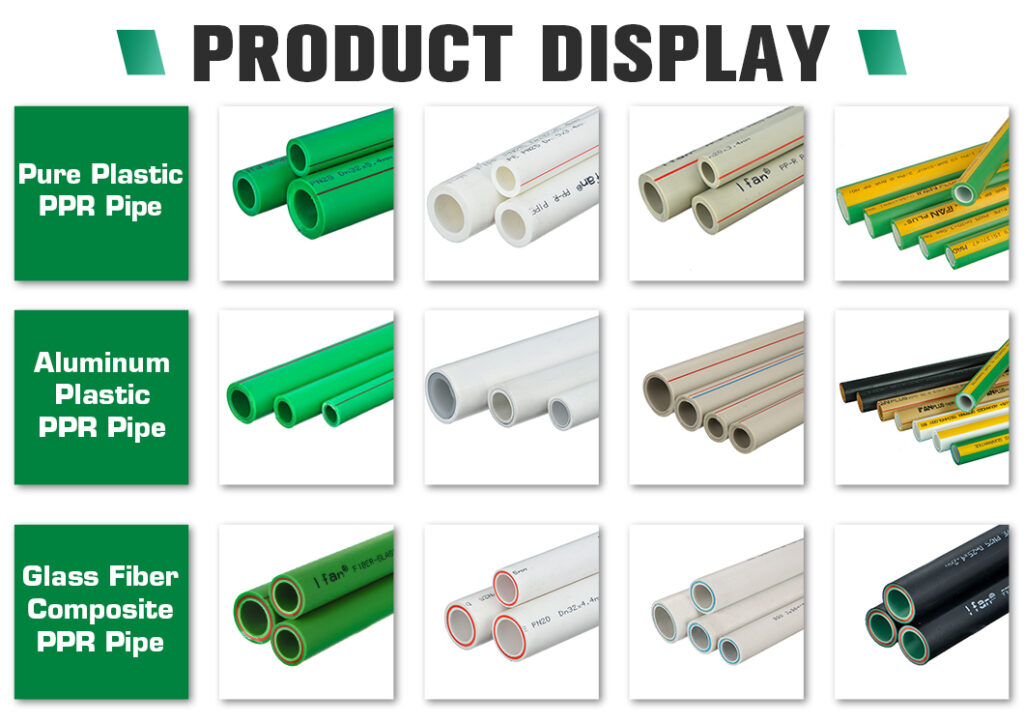
5. Noise Reduction
PPR pipes are known for their low noise transmission. Water flowing through these pipes generates significantly less noise compared to metal pipes, providing a more pleasant and peaceful environment in residential and commercial buildings.
6. Hygienic and Safe
PPR pipes are non-toxic and do not release any harmful substances into the water. They are approved for use in drinking water systems, ensuring the safety and well-being of occupants in buildings.
7. Long Lifespan
PPR pipes are designed to last. Their resistance to scaling, corrosion, and chemical agents ensures a long and maintenance-free lifespan. This durability is essential for reducing maintenance and replacement costs in construction projects.
8. Versatile Applications
PPR pipes can be used for various applications beyond traditional plumbing. They are suitable for radiant heating systems, compressed air lines, and industrial processes. Their versatility simplifies the procurement process for construction projects by allowing a single piping solution to serve multiple purposes.
In conclusion, PPR pipes offer numerous advantages in the construction industry. Their resistance to corrosion, ease of installation, leak-proof joints, thermal insulation, noise reduction, safety, longevity, and versatility make them an ideal choice for modern construction projects. By using PPR pipes, builders can ensure efficient and sustainable plumbing systems that meet the evolving needs of the construction sector.