
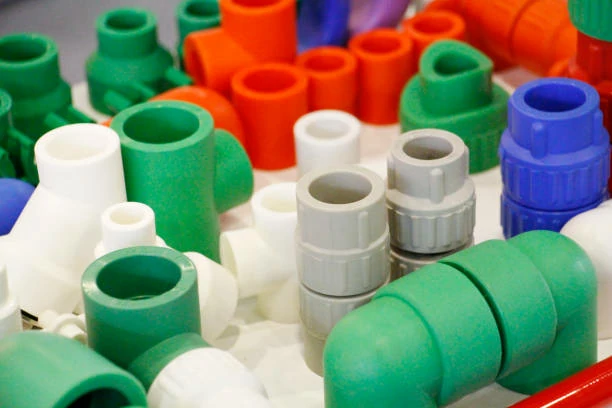
When it comes to plumbing systems using PPR (Polypropylene Random Copolymer) pipes, selecting the right fittings is crucial for ensuring durability, efficiency, and leak-free connections. Among the many PPR fittings available, tees, valves, and flanges stand out as essential components that serve different functions. This article will help you understand the differences, applications, and benefits of these three common PPR fittings, so you can make the best choice for your plumbing project.
What Are PPR Tees, Valves, and Flanges?
T-shirts PPR
PPR tees are fittings shaped like the letter “T” that connect three sections of pipe. They allow you to split or combine fluid flow, making them ideal for branch connections in plumbing networks. Available in equal or reducing sizes, tees are essential when you need to divert water flow in a system.
Vannes PPR
Valves regulate or stop the flow of water within the pipe system. PPR valves are designed to control pressure, flow rate, and shut off water when needed. They are indispensable in managing plumbing systems, especially where maintenance or emergency shutdowns are necessary.
Brides PPR
Flanges are fittings that connect pipes to other equipment or pipe sections, usually bolted together with gaskets to ensure a tight seal. PPR flanges allow for easy assembly and disassembly of pipes, which is beneficial for maintenance or repair.
Applications of PPR Tees, Valves, and Flanges
Each fitting serves a unique role in plumbing systems:
- T-shirts are widely used in water distribution networks for branching pipelines.
- Vannes are critical in controlling water flow, isolating sections of a system, or regulating pressure.
- Brides are common where pipe connections need to be detachable, such as at pumps, tanks, or valves.
Choosing the right fitting depends on the system design and maintenance needs.
Advantages of Each Fitting
Benefits of PPR Tees
- Enable flexible system layouts by creating branches.
- Available in multiple sizes for diverse plumbing needs.
- Resistant to high temperature and pressure.
- Easy to install with welding techniques.
Benefits of PPR Valves
- Provide precise flow control.
- Allow quick shut-off in emergencies or repairs.
- Improve system safety and efficiency.
- Durable and corrosion-resistant.
Brides PPR
- Facilitate quick assembly and disassembly.
- Allow easy access for inspection and maintenance.
- Ensure leak-proof connections with gaskets.
- Support heavy-duty industrial applications.
How to Choose the Best PPR Fitting for Your Project
When deciding between tees, valves, or flanges, consider:
- System Purpose: For water branching, choose tees; for flow control, valves; for detachable connections, flanges.
- Pressure and Temperature Ratings: Verify that fittings match the system’s operating conditions.
- Maintenance Needs: Flanges simplify maintenance; valves enable emergency control.
- Installation Method: All these fittings typically require heat fusion welding for PPR pipes, but flanges need bolted connections as well.
Installation Tips for PPR Fittings
- Cut Pipes Cleanly: Use a proper pipe cutter for straight cuts.
- Prepare and Clean: Remove any burrs and clean pipe ends before welding.
- Use Correct Heating Tools: Heat the pipe and fitting ends evenly to avoid weak joints.
- Align Precisely: Join and hold parts firmly to ensure a strong, leak-proof seal.
- Allow Cooling: Wait for the joint to cool before applying pressure or water flow.
Following these steps enhances the longevity and reliability of your plumbing system.
Conclusion
Choosing the best PPR fitting—whether tees, valves, or flanges—depends on your specific plumbing needs. Tees are perfect for branching pipelines, valves are essential for controlling flow, and flanges offer convenience for maintenance. Understanding each fitting’s function and benefits allows you to design a reliable and efficient plumbing system.
For long-lasting performance, always select high-quality PPR fittings from trusted brands and follow proper installation procedures. Doing so ensures your system operates smoothly and remains durable for years to come.
Normes internationales de l'IFAN
Les raccords et tubes PPR de l'IFAN sont strictement conformes aux principales normes internationales et régionales, garantissant des performances de haute qualité et une compatibilité sur les marchés mondiaux. Ces normes comprennent :
- ISO 15874 – Spécifie les exigences relatives aux systèmes de tuyauterie PPR utilisés dans les installations d’eau chaude et froide.
- EN 15874 – La norme européenne équivalente à la norme ISO 15874, largement reconnue dans toute l’UE.
- ASTM F2389 – Une norme américaine pour les systèmes de tuyauterie PPR à pression nominale utilisés dans les systèmes d’eau résidentiels et commerciaux.
- DIN 8077/8078 – Normes allemandes qui définissent les dimensions et la qualité des tuyaux PPR, mettant l’accent sur la durabilité et la cohérence.
- GB/T 18742 – La norme nationale chinoise pour les systèmes de tuyauterie en polypropylène, applicable dans les environnements domestiques et industriels.
- NBR 15884 – La norme brésilienne garantissant la qualité des produits pour les systèmes PPR utilisés dans toute l’Amérique du Sud.
En s'alignant sur ces certifications, l'IFAN fournit des solutions de tuyauterie qui répondent aux exigences internationales en matière de sécurité, efficacité, et longévité.
Connecter
IFAN est un fabricant chinois de tubes, raccords et vannes en plastique fort de 30 ans d'expérience. Si vous êtes intéressé par les raccords en cuivre, les vannes en cuivre, les tubes et raccords en plastique IFAN, n'hésitez pas à nous contacter. IFAN vous propose une variété de tubes standards pour répondre à vos besoins spécifiques. Cliquez ci-dessous pour en savoir plus sur la vaste gamme de vannes et de systèmes de tuyauterie abordables et économiques d'IFAN.
Nous répondrons à votre e-mail ou fax dans les 24 heures.
Vous pouvez nous appeler à tout moment si vous avez des questions sur notre production.
Pour plus d'informations, veuillez visiter notre site Web https://www.waterpipefactory.com/
Veuillez envoyer un mail à : [email protected]
WhatsApp : + 86 152 1588 7738