
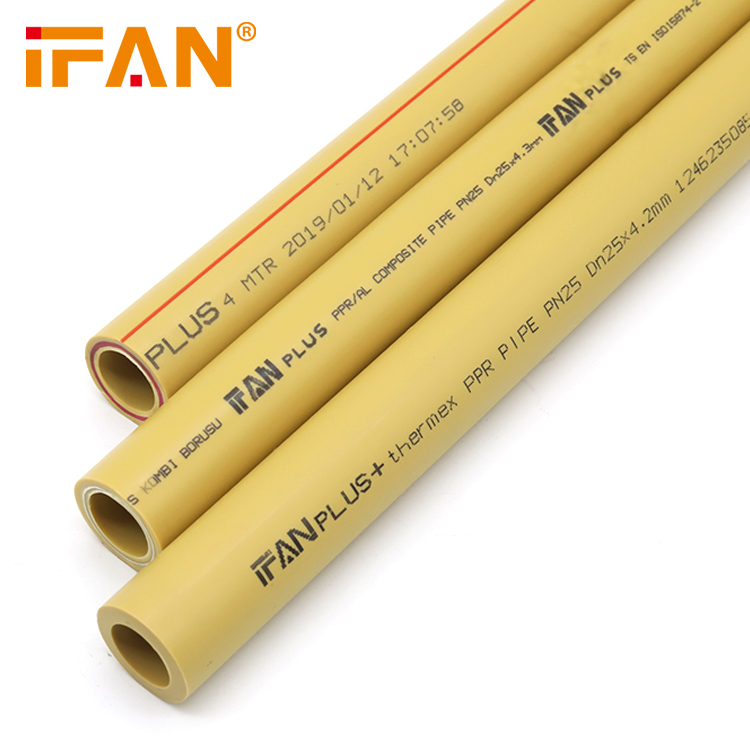
Le rôle polyvalent des tuyauteries PPR dans l'industrie moderne
Polypropylène Random Copolymer (PPR) piping has established itself as an indispensable component in a wide range of industries, thanks to its unique attributes and versatility. This comprehensive guide dives into the world of PPR piping, exploring its composition, key features, and multifaceted applications across various sectors.Usine IFAN Plus de 30 ans d'expérience dans la fabrication, support de personnalisation des couleurs et des tailles échantillon gratuit.Bienvenue pour consulter le catalogue et les échantillons gratuits.Ceci est notre site Web Facebook : +.
Introduction à la tuyauterie PPR
Pntek PPR, or Polypropylene Random Copolymer, is a thermoplastic material known for its remarkable properties. Comprising a copolymer of propylene and ethylene, PPR pipes have gained immense popularity for their application in industries such as construction, manufacturing, and agriculture. Their versatility in transporting different fluids, both hot and cold, makes them an attractive choice.
Caractéristiques clés des tuyauteries PPR
The distinct features of Pntek PPR piping are pivotal in driving its use across industries:
1. Exceptional Corrosion Resistance
PPR’s primary strength lies in its resistance to corrosion. This quality makes it ideal for transporting various fluids, including aggressive chemicals, potable water, and industrial waste, thereby maintaining the integrity of the transported substances.
2. Haute stabilité thermique
Pntek PPR pipes boast remarkable thermal stability, which enables them to effectively manage hot and cold water systems. With a capacity to withstand temperatures of up to 90°C (194°F), they find extensive use in plumbing and heating applications.
3. Durabilité
The durability of PPR pipes is a standout feature. They can endure high pressure and are resistant to impacts, ensuring a long lifespan and minimal maintenance requirements.
4. Faible conductivité thermique
With low thermal conductivity, PPR pipes help minimize heat loss, contributing to energy efficiency in heating systems.
5. Propriétés hygiéniques
The non-toxic, lead-free, and corrosion-resistant nature of PPR pipes makes them safe for transporting potable water, a crucial factor for their application in the water supply industry.
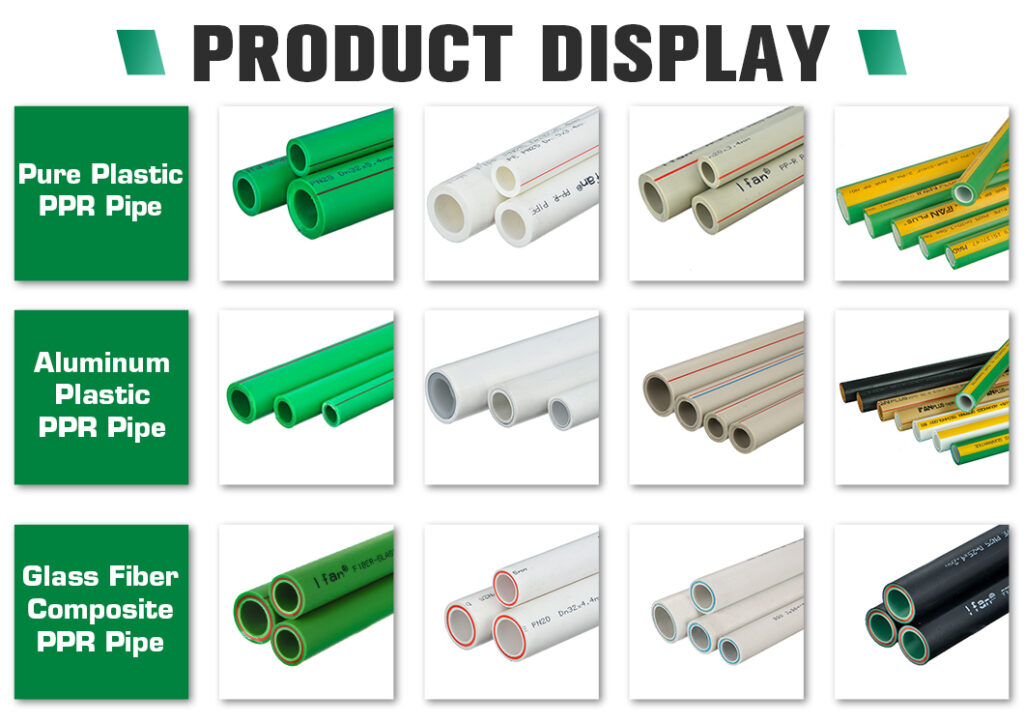
Applications dans tous les secteurs
PPR piping plays a vital role in a multitude of industry sectors:
1. Construction et plomberie
In the construction industry, PPR pipes are widely used for water supply, heating, and sanitation systems. Their durability and hygienic properties make them an ideal choice for plumbing applications in residential and commercial structures.
2. Secteur industriel
Pntek PPR piping proves its mettle in the industry, facilitating the transfer of chemicals, industrial fluids, and wastewater, owing to its corrosion resistance and high-temperature stability.
3. Agriculture et serres
The agricultural and greenhouse sectors rely on efficient irrigation systems. PPR pipes are durable and resistant to chemical fertilizers and pesticides, making them suitable for agricultural water supply.
4. Piscines et spas
PPR piping is an essential component in swimming pools and spa facilities, ensuring the continuous and hygienic circulation of water.
5. Transport de gaz
In regions where safety regulations and material standards permit, PPR pipes are used for the distribution of gases.
6. Infrastructures et projets municipaux
PPR piping finds extensive application in municipal projects, including the construction of water treatment plants and sewerage systems.
7. Applications géothermiques
Dans les systèmes de chauffage et de refroidissement géothermiques, les tuyaux PPR sont privilégiés pour leur capacité à résister aux variations de température élevées.
8. Industrie alimentaire et des boissons
L'industrie agroalimentaire utilise des tuyaux en PPR pour le transport des fluides en raison de leurs propriétés non toxiques, non corrosives et hygiéniques.
Entretien et soins
Pour garantir la longévité et l'efficacité des canalisations PPR, un entretien régulier est essentiel. Il comprend des inspections périodiques pour détecter les fuites, garantir l'intégrité des joints et traiter tout signe d'usure ou de dommage.
Conclusion
Les canalisations en PPR constituent une solution polyvalente, durable et efficace, répondant à de multiples besoins dans différents secteurs. Leurs propriétés uniques, notamment leur résistance à la corrosion, leur grande stabilité thermique et leur non-toxicité, en font un choix attractif pour diverses applications. Comprendre les avantages et les applications des canalisations en PPR est essentiel pour maximiser leur potentiel dans divers secteurs. Que ce soit dans la construction, l'industrie, l'agriculture ou les projets municipaux, les canalisations en PPR continuent d'offrir des solutions fiables et durables pour le transport des fluides.