
HDPE for Non-Pressure Applications Using
HDPE Fittings in Low-Pressure Drain, Waste, and Vent Systems
Polyvinyl chloride (PVC) has traditionally dominated low-pressure drainage, waste, and vent (DWV) plumbing systems. But high-density polyethylene (HDPE) pipe and fittings now offer an advantageous alternative non-pressure piping solution. This article explores HDPE for DWV applications.Pabrik IFAN dengan 30+ tahun pengalaman manufaktur mendukung kustomisasi warna/ukuran dan sampel gratis. Selamat datang untuk berkonsultasi Katalog dan sampel gratis. Ini adalah situs web Facebook kami: +.
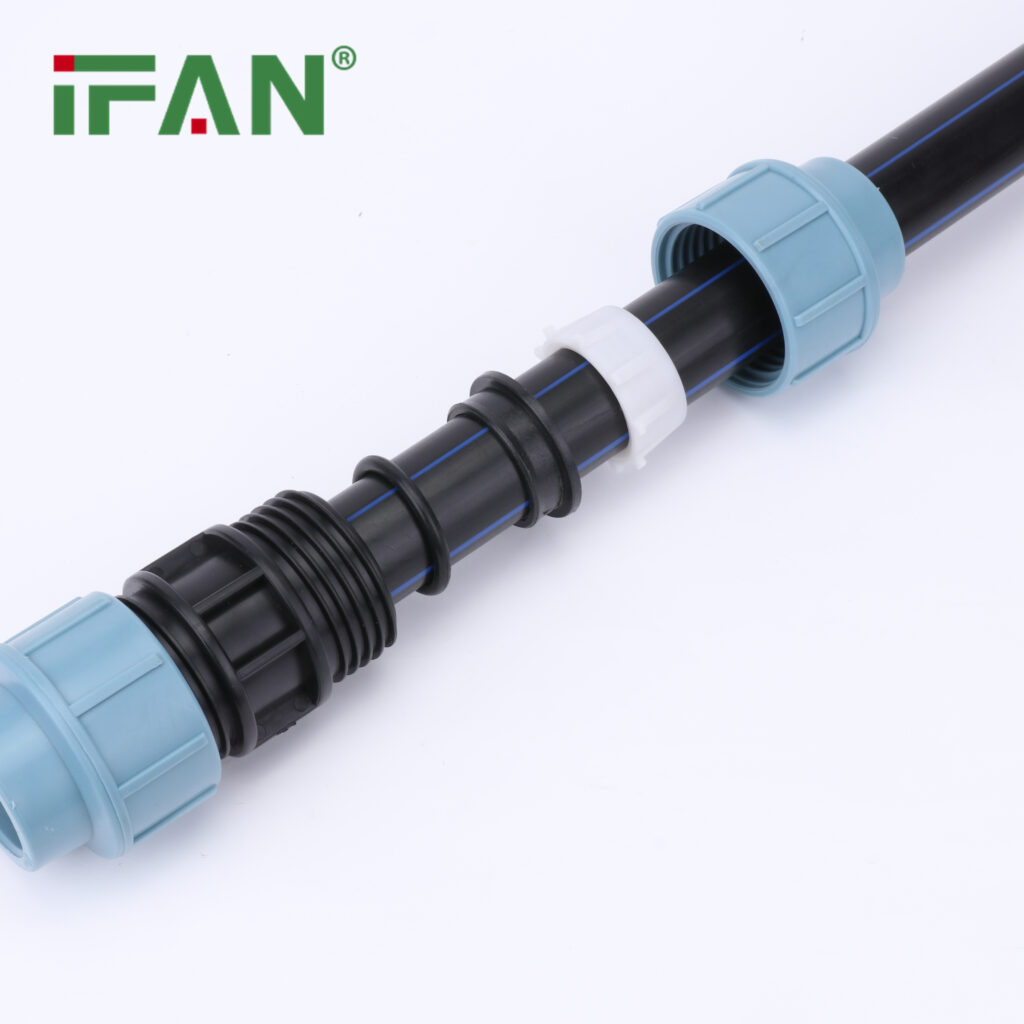
HDPE Drainage Materials
Several material options suit non-pressure HDPE DWV piping:
- Solid wall HDPE pipe and fittings – Smooth bore handles moderate external loads.
- Profile wall HDPE pipe – Adds stiffness while reducing weight.
- Corrugated HDPE pipe – Lightweight, flexible, high flow capacity.
- Perforated HDPE pipe – Allows water ingress and drainage collection.
HDPE for non-pressure uses follows standards like ASTM F714 and ASTM D3350. Material engineering balances durability, chemical resistance, flow capacity, and elongation.
Key Properties of HDPE for DWV Systems
HDPE demonstrates properties that make it highly suitable for non-pressure drainage piping:
- High tensile and flexural strength prevents cracks from settling.
- Resilience tolerates ground movement and seismic shifts.
- Withstands soil loads and abrasion compared to fragile PVC.
- Not subject to creep deformation over time.
- Chemically resistant to conveying corrosive effluents.
- Lightweight compared to concrete, clay, or cast iron piping.
HDPE material quality exceeds the needs of low-pressure drainage environments.
HDPE Non-Pressure Pipe Joining Methods
Several techniques produce leak-free joints for non-pressure HDPE drainage systems:
- Electrofusion – Integral coil melts and fuses sections together.
- Butt Fusion – Heated pipe ends get pressed together, forming monolithic welds.
- Mechanical Couplings – Stainless steel clamps join plain ends with gaskets.
- Flanges – Bolted bracket connections allow easy assembly.
- Compression Fittings – Tighten gaskets between pipes and socket fittings.
Both permanent fusion and demountable mechanical options suit field assembly and future modifications.
Applications for HDPE Non-Pressure Drainage Pipe
Typical applications benefiting from HDPE non-pressure drainage pipes include:
- Sanitary sewer mains and building connections.
- Foundation perimeter drainage collection lines.
- Highway, airfield, and stadium drainage conduits.
- Landfill leachate and gas collection piping.
- Mining slurry and waste effluent piping.
- Building roof runoff leaders and stormwater drains.
- Subsoil drainage for golf courses and agriculture.
- Vent stacks for soil gases and plumbing exhaust.
HDPE safely handles large drainage flows across environmental conditions that quickly corrode metal.
Advantages of HDPE vs. PVC
HDPE drainage systems offer advantages compared to standard PVC drains:
- Greater impact and puncture resistance avoid breaks.
- No risk of joint or pipe defects from poor solvent welding.
- Withstands abrasion from silt and grit in storm effluent.
- Maintains function through freeze/thaw extremes.
- Electrofusion joints employ no glues or primers.
- Improved chemical handling for industrial waste streams.
- Lighter weight and flexibility ease installation.
HDPE provides durable, high-capacity drainage piping across municipal and industrial needs.
Large Diameter HDPE Non-Pressure Piping
Recent innovations enable large-diameter HDPE drainage pipes:
- Corrugated pro-wall – Up to 60” diameter conduit with high flows.
- Box-profile wall – Rectangular and square pipes for unique needs.
- Custom fabricated fittings – Large tees, wyes, elbows, and adapters.
Big pipes and connections join together without leakage or blockage issues that degrade flow. HDPE toughness prevents damage from debris impact.
The Future of HDPE in Drainage Applications
With advanced polyethylene materials and fused joints, HDPE increasingly displaces traditional but inferior DWV piping:
- PVC lacks the durability and chemical resistance of HDPE.
- Concrete and clay are brittle with leaky joints.
- Steel and cast iron corrode over time.
Specifying HDPE for critical building, highway, and industrial DWV systems ensures maximum performance and service life. Contact us to learn more about utilizing HDPE’s advantages over traditional non-pressure pipe materials.
JIKA
Pabrik IFAN dimulai pada tahun 1993IFAN memiliki bengkel seluas 120.000 meter persegi dengan 610 staf. IFAN dapat merancang dan memproduksi semua jenis pipa dan fitting, termasuk pipa dan fitting PPR, PVC, CPVC, PPSU, HDPE, PEXA, PEXB, PERT, fitting kuningan, katup bola kuningan, sistem pemanas, sistem gas, keran sanitasi, dan selang. Selama 30 tahun terakhir, IFAN tidak pernah melupakan misinya, yaitu melindungi kesehatan dan keselamatan. Pabrik IFAN menggunakan material terbaik untuk memproduksi pipa dan fitting berkualitas tinggi dengan lini produksi otomatis dan mesin kontrol kualitas berteknologi tinggi.