
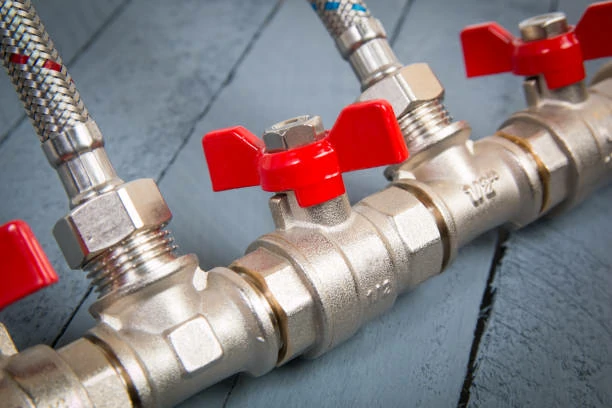
3-way valves play a significant role in process automation by controlling the flow of fluids or gases. Their ability to divert, mix, or shut off fluid flow enhances process control in industries like manufacturing, chemical processing, and HVAC systems. These valves provide flexibility in managing flow paths and are vital for increasing operational efficiency and reducing system complexity. This article explores how 3-way valves enhance process control, focusing on their applications, advantages, and impact on automated systems.
1. Introduction to 3-Way Valves in Automation
In process automation, efficient fluid and gas control is crucial to ensure smooth operations. 3-way valves are key components in automating these processes. They offer versatile control by connecting three ports, allowing the regulation of flow directions between two or more pipes. These valves can either mix, divert, or shut off flow, providing flexibility and accuracy. Industries such as manufacturing, water treatment, HVAC, and chemical processing rely heavily on 3-way valves to streamline their operations. By integrating 3-way valves into automated systems, companies can enhance productivity, reduce energy consumption, and minimize downtime.
The design of 3-way valves is simple yet effective. They come in different types, including L-port and T-port configurations. In the L-port valve, the flow is diverted between two outlets, while in the T-port valve, the flow is mixed or diverted between three pathways. These configurations enable operators to fine-tune fluid or gas flow with high precision. Whether in controlling the flow of water, air, or chemicals, 3-way valves play an integral role in improving automation efficiency.
2. Applications of 3-Way Valves in Automation
3-way valves find widespread use in various automated systems due to their versatility. In chemical processing, they control the flow of reagents and solvents through different paths, enabling accurate mixing and separation. For example, in a process where two chemicals must be combined at specific ratios, a 3-way valve can be used to regulate the mixing process, ensuring the desired chemical composition.
In HVAC systems, 3-way valves regulate air or water flow for heating, ventilation, and cooling purposes. For instance, in a heating system, these valves can redirect hot water from a boiler to different zones of a building. By adjusting the flow between various pipes, 3-way valves optimize temperature control in individual rooms. This improves energy efficiency and comfort in commercial and residential buildings.
Water treatment plants also make extensive use of 3-way valves. These valves help control the direction of water flow through various filtration and treatment stages. For instance, a 3-way valve can direct untreated water to a filtration system, then divert treated water to storage tanks. In this way, 3-way valves play a crucial role in maintaining the proper flow and ensuring optimal water quality.
3. Advantages of 3-Way Valves in Automation
3-way valves offer numerous advantages in automated systems, making them essential for process control. One significant benefit is their ability to reduce system complexity. In many applications, multiple single valves would be required to achieve similar control as a single 3-way valve. This simplification reduces the number of components, thus decreasing system maintenance and lowering costs.
Additionally, 3-way valves enable precise control over fluid or gas flow. By allowing for mixing or diverting functions, they provide operators with better control over the flow rate and direction. This precision is particularly useful in industries such as food and beverage processing, where consistent flow control is essential to maintain quality and safety standards.
3-way valves also improve energy efficiency in automated systems. In HVAC applications, for example, they help optimize the flow of air or water, reducing the need for additional pumps or compressors. By adjusting the flow dynamically, these valves help maintain system balance and minimize energy wastage. The result is lower operating costs and a more sustainable system.
Moreover, 3-way valves improve system flexibility by enabling multiple flow paths. Operators can easily change the flow direction or mix different fluids, allowing for adaptable operations. This flexibility is crucial in industries where production needs can change rapidly, requiring quick adjustments to the system. For example, in chemical production, a 3-way valve can switch between different chemical batches, improving operational versatility.
4. How 3-Way Valves Improve Process Control
Process control is enhanced by 3-way valves through their ability to modulate the flow of fluids with high precision. In automated systems, the integration of 3-way valves enables real-time adjustments to fluid or gas paths, ensuring optimal system performance. This is particularly important in processes where consistent conditions are required, such as in pharmaceutical manufacturing or water treatment.
In a mixing application, a 3-way valve allows two fluids to combine in precise proportions, improving the consistency and quality of the output. For example, in a mixing tank for chemical reactions, a 3-way valve can control the flow of reactants and solvents, ensuring that they are added in the correct amounts. The ability to fine-tune these inputs is critical to achieving the desired reaction rates and preventing errors in the process.
Similarly, in diverting applications, 3-way valves can control the flow of fluids to different parts of the system based on real-time feedback. This improves the ability to handle fluctuating conditions, such as varying pressure or temperature. In an automated production line, a 3-way valve can quickly redirect a fluid to an alternate path if a problem is detected in the primary system, minimizing downtime and preventing damage to equipment.
5. Challenges and Considerations in Using 3-Way Valves
While 3-way valves offer numerous benefits, there are challenges and considerations that must be taken into account when implementing them in automation systems. One such challenge is the potential for wear and tear due to frequent cycling. Depending on the application, 3-way valves may undergo frequent opening and closing, which can cause valve components to degrade over time. Regular maintenance is essential to ensure the longevity of the valve and maintain optimal system performance.
Another consideration is the valve’s pressure rating. Some 3-way valves are designed for low-pressure applications, while others can handle higher pressures. It’s crucial to select a valve with the appropriate pressure rating to prevent system failures. In high-pressure systems, valves must be made of materials that can withstand the stress without leaking or breaking.
Additionally, the compatibility of the valve with the fluids or gases being controlled is critical. For example, certain chemicals may corrode or damage valve materials, leading to leaks or system failure. To address this, it is important to choose 3-way valves made from materials that are resistant to the specific chemicals or fluids in the system. Valve material compatibility is particularly important in industries such as oil and gas, where aggressive substances are often involved.
6. Future Trends in 3-Way Valve Technology for Automation
The future of 3-way valve technology in process automation looks promising, with several advancements on the horizon. One key trend is the integration of digital technologies and smart valves. With the rise of the Internet of Things (IoT) and Industry 4.0, 3-way valves are increasingly being equipped with sensors and automation capabilities. These smart valves can monitor flow rates, pressure, and temperature, providing real-time data to operators for better decision-making.
Furthermore, advancements in materials science are expected to lead to the development of more durable and chemically resistant 3-way valves. As industries continue to demand higher performance and greater reliability, the ability of valves to withstand harsh conditions, including extreme temperatures and pressures, will be crucial. Innovations in coatings and materials will allow 3-way valves to operate in even more challenging environments.
Automation and robotics are also changing the way 3-way valves are used in manufacturing and process control. Automated valve actuators are improving the speed and accuracy of valve operations, reducing the need for manual intervention. This level of automation will continue to improve system efficiency and safety, making 3-way valves even more integral to future process control systems.
Conclusion
3-way valves are essential components in process automation, offering precise control over fluid and gas flow. Their versatility in diverting, mixing, and shutting off flow paths enhances efficiency and simplifies system design. By improving process control in industries like chemical processing, HVAC, and water treatment, these valves contribute to optimized performance, reduced operational costs, and greater flexibility. Despite some challenges, such as wear and compatibility issues, the benefits of 3-way valves in automation far outweigh the drawbacks. As technology advances, the future of 3-way valves will be marked by smarter, more durable designs that continue to enhance automation and process control across various industries.
International Standards for Brass Ball Valves
Brass ball valves are widely used in various fluid control applications due to their durability, reliability, and high resistance to corrosion. To ensure these valves meet the necessary safety and performance requirements, they are designed according to numerous international standards. For instance, ASTM 2846 outlines specifications for thermoplastic ball valves, while DIN 8079/8080 focuses on compatibility with polyethylene and polypropylene pipes. Additionally, standards such as ASTM F441/F441M SCH80 and AS/NZS 1477 ensure the valves’ effectiveness in PVC piping systems. By adhering to these strict regulations, brass ball valves maintain optimal performance, ensuring they are suitable for both residential and industrial settings, including drinking water systems, with certifications like NSF/ANSI 14.
Connect
IFAN is a Chinese manufacturer of plastic pipes, fittings and valves with 30 years of experience. If you are interest in IFAN copper fittings, copper valves, plastic pipes and fittings, please contact us. IFAN offers you a variety of standard pipes to meet your specific needs. Click below to learn more about IFAN’s wide range of affordable and cost-effective valve products and piping system related products.
We will reply your email or fax within 24 hours.
You can call us at any time if there is any question on our production.
For more information,pls visit our webside https://www.waterpipefactory.com/
Pls Mailto: [email protected]
Whatsapp: + 86 152 1588 7738