
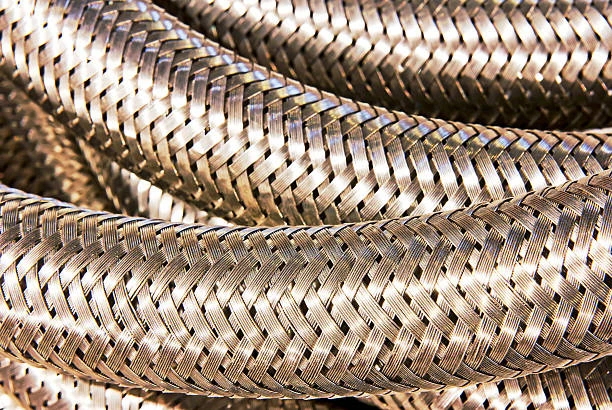
Braided hoses are widely used in industries ranging from plumbing to automotive due to their flexibility, pressure resistance, and durability. Among the many aspects that define the performance of a braided hose, the extrusion process plays a key role. Understanding how extrusion works, why it matters, and where these hoses are used can help buyers, engineers, and installers make better product decisions. This article explores the extrusion technology behind braided hoses, their key characteristics, and common applications, while answering frequently asked questions.
Frequently Asked Questions (FAQ)
1. What is the extrusion process in braided hose manufacturing?
Extrusion is a method where raw material is forced through a shaped die to form a continuous tube, which becomes the inner layer of the hose. It sets the foundation for the braided reinforcement.
2. Why is extrusion important for braided hoses?
Extrusion determines the hose’s internal diameter, wall thickness, and consistency. A high-quality extrusion process results in stronger, leak-resistant hoses.
3. Are all braided hoses made using extrusion?
Yes, virtually all braided hoses start with an extruded inner tube, often made from rubber, PVC, or thermoplastic elastomer (TPE). The braid is then added later for reinforcement.
4. What materials are commonly used in extrusion for braided hoses?
Materials include synthetic rubber (like EPDM or NBR), PVC, polyurethane, and silicone, depending on the application. Each material has different heat and chemical resistance.
5. How does the extrusion process affect hose longevity?
Properly extruded hoses maintain their shape under pressure, resist kinking, and show fewer signs of wear. Poor extrusion can lead to weak spots and shorter service life.
Definition and Key Features of Braided Hoses
Braided hoses are flexible tubing products reinforced with a woven or wrapped layer, usually made of stainless steel wire, polyester, or aramid fibers. Their design enables them to handle higher pressure and more challenging environments than non-braided hoses.
At the core of every braided hose is an inner tube created through extrusion. This tube serves as the fluid pathway and provides the initial shape and structure. During extrusion, the chosen material is heated until soft, then forced through a die that shapes it into a cylindrical form. The tube then cools and is prepared for the braiding step.
Key features of braided hoses include:
- Pressure Resistance: The braid adds strength, allowing the hose to withstand high internal pressures.
- Flexibility: Even with reinforcement, the hoses remain easy to bend and route.
- Temperature Tolerance: Depending on the extruded material, hoses can endure a wide range of temperatures.
- Durability: The combination of extrusion and braiding results in long-lasting hoses suitable for demanding conditions.
Extrusion ensures dimensional precision, uniform wall thickness, and strong adhesion to other hose layers, which are critical for product reliability.
Common Applications and Industries
Braided hoses serve multiple sectors, each requiring specific performance criteria. The extrusion process must therefore meet different demands, depending on the final application:
1. Plumbing and Water Supply
In residential and commercial buildings, braided hoses connect faucets, toilets, and water heaters. The inner layer, often made of EPDM rubber or PVC, is extruded to precise dimensions for a snug, leak-proof fit.
2. Automotive Industry
Vehicles rely on braided hoses for fuel lines, brake systems, and coolant transport. These hoses must be resistant to pressure, heat, and vibrations. Extrusion ensures the inner tube can handle fluids like gasoline and brake fluid without degradation.
3. Food and Beverage Sector
Extruded food-grade hoses, typically made of silicone or thermoplastic materials, carry liquids in beverage machines, dairies, and processing plants. The extrusion process must comply with FDA and other safety standards.
4. Chemical and Pharmaceutical Industries
Braided hoses transport corrosive fluids and gases. The inner layer, extruded from chemically resistant materials like PTFE or FKM, must remain stable under harsh conditions.
5. Industrial Equipment
In factories, braided hoses link machinery, compressors, and hydraulic systems. The extrusion process helps create strong, kink-resistant hoses capable of long service life.
In each case, the extrusion phase sets the stage for performance. A poor-quality extrusion could lead to dimensional inconsistencies, compromising the hose’s ability to be properly braided and sealed.
The Extrusion Process: Step-by-Step Overview
To better appreciate how braided hoses are made, let’s walk through the extrusion stage in more detail:
Step 1: Material Selection
Manufacturers begin by choosing a raw material suited to the application. For instance, EPDM rubber offers excellent heat resistance, while PVC is more cost-effective for low-pressure uses.
Step 2: Feeding and Melting
The raw polymer is fed into an extruder, which uses a rotating screw to push the material through a heated barrel. Temperatures vary depending on the material but typically range from 160°C to 300°C.
Step 3: Shaping the Tube
Once the material becomes viscous, it moves through a shaping die. The die determines the tube’s internal diameter and wall thickness. A precisely machined die ensures consistent dimensions along the length of the hose.
Step 4: Cooling
The hot tube is cooled, often using a water bath or air chamber. This stabilizes the shape and solidifies the material, ensuring it holds up during the braiding phase.
Step 5: Quality Control
Before moving to the next production step, the extruded tube undergoes inspections. These checks include diameter measurements, wall thickness checks, and visual inspections for surface defects.
The success of the extrusion phase determines how well the hose can be braided, clamped, and used under pressure.
Why Extrusion Quality Matters for Braided Hoses
Poor extrusion techniques can cause serious issues down the line. For example, if the wall thickness varies, certain parts of the hose might not withstand pressure evenly, leading to bulging or rupture. If the surface isn’t smooth, the braiding layer may not adhere correctly or could snag during application.
Moreover, if the inner layer doesn’t cool properly or hardens unevenly, it can warp or collapse under braiding tension. Therefore, skilled technicians and advanced equipment are essential to control temperature, speed, and die calibration throughout the extrusion process.
Manufacturers that invest in advanced extrusion machinery usually produce hoses with better performance and longevity. This also reduces waste, increases productivity, and ensures consistent quality across batches.
Emerging Trends in Hose Extrusion
As industries demand more specialized hoses, the extrusion process has also evolved. Some notable trends include:
- Co-extrusion: This process involves extruding multiple layers simultaneously, such as combining a flexible core with a chemical-resistant lining.
- Laser-guided extrusion: Newer machines use lasers to monitor wall thickness in real-time, improving consistency.
- Eco-friendly materials: Manufacturers now use recyclable or low-impact materials, reducing the environmental footprint of production.
- Automation and smart controls: Real-time data tracking helps maintain quality and adapt quickly to design changes.
These innovations make braided hoses even more reliable, adaptable, and sustainable for modern industry needs.
Conclusion
Braided hoses are essential components in many sectors due to their strength, flexibility, and adaptability. At the heart of each hose lies the extrusion process—a precise and critical step that shapes the inner tube and determines the overall performance of the final product. From selecting the right material to carefully shaping and cooling the tube, extrusion directly affects the durability, safety, and function of the hose.
Understanding this process helps buyers and users make informed decisions when choosing hoses for specific applications. Whether for home plumbing, automotive systems, or industrial machinery, the quality of extrusion defines the quality of the hose itself. As technologies improve, so will the extrusion methods, making braided hoses even more reliable in the years to come.
IFAN International Standards
To meet global quality demands, IFAN HDPE pipes follow a wide range of international standards, such as ASTM D3035, ISO 4427, EN 12201, and GB/T 13663. These standards define the pipe’s strength, durability, and safety. Moreover, IFAN complies with DIN 8074/8075, AS/NZS 4130, JIS K6760, BS 6572, and CSA B137.1, making their products suitable for water, gas, and industrial systems worldwide. Because IFAN meets all these trusted certifications, users can confidently choose IFAN for reliable performance in any environment.
Contact Us
If you have any questions about cold taps or need help selecting the right model, feel free to reach out to our team. We offer expert advice and support tailored to your industry and application.
IFAN is a Chinese manufacturer of plastic pipes, fittings and valves with 30 years of experience. If you are interest in IFAN copper fittings, copper valves, plastic pipes and fittings, please contact us. IFAN offers you a variety of standard pipes to meet your specific needs. Click below to learn more about IFAN’s wide range of affordable and cost-effective valve products and piping system related products.
We will reply your email or fax within 24 hours.
You can call us at any time if there is any question on our production.
For more information,pls visit our webside https://www.waterpipefactory.com/
Pls Mailto: [email protected]
Whatsapp: + 86 152 1588 7738