
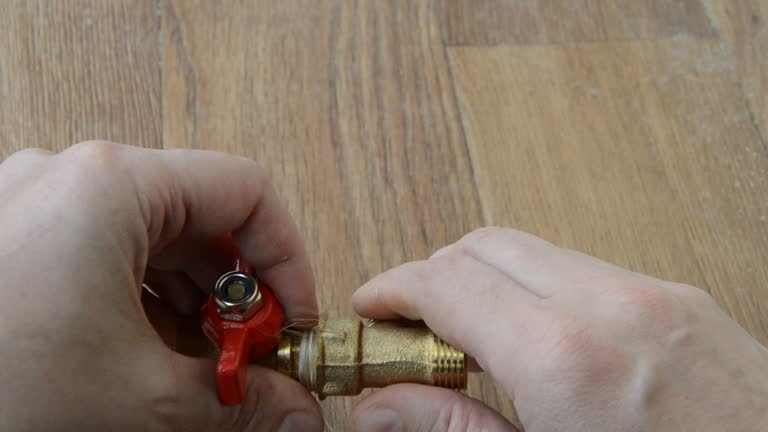
1. The Art of Material Selection
Manufacturers prioritize high-grade brass, stainless steel, and composite alloys for drainage ball tap production. These materials balance corrosion resistance, durability, and cost-efficiency. Foundries source recycled metals to meet sustainability targets, while labs test raw batches for impurities. Advanced polymers like PTFE (Teflon) become sealing components, ensuring leak-proof performance. Material engineers tailor compositions for specific climates—marine-grade bronze suits coastal areas, while titanium alloys serve extreme-temperature industrial systems.
2. Precision Casting Techniques
Automated foundries melt metals at 1,200°C to form valve bodies and ball cores. Robotic arms pour molten alloys into ceramic molds, achieving micrometer-level accuracy. CNC-controlled cooling chambers prevent warping, while X-ray scanners detect internal voids. For complex geometries, 3D-printed sand molds enable rapid prototyping. Post-casting, machines grind surfaces to a Ra 0.8µm finish, ensuring seamless ball rotation within the valve chamber.
3. CNC Machining for Flawless Components
CNC lathes shape raw castings into precise ball taps. Diamond-tipped tools carve spherical balls with 0.005mm tolerance, matching ISO 5211 standards. Multi-axis mills drill bore holes aligned to pipeline specifications. Thread-rolling machines create uniform NPT or BSPP connections. Quality controllers validate dimensions using laser micrometers, rejecting deviations exceeding ±0.01mm. This stage ensures every component interlocks perfectly during assembly.
4. Heat Treatment for Enhanced Durability
Factories harden ball taps through quenching and tempering cycles. Components heat to 850°C in vacuum furnaces, then cool rapidly in polymer solutions. This process boosts tensile strength by 300% and wear resistance by 50%. For stainless steel variants, passivation baths apply nitric acid coatings to prevent oxidation. Post-treatment, ultrasonic cleaners remove residual particles, preparing parts for final assembly.
5. Robotic Assembly and Quality Testing
Automated lines assemble ball taps at 120 units/hour. Robots insert stems into pre-lubricated sockets, torque bolts to 25 Nm, and press-fit seals. Vision systems verify lever alignment within 2° of tolerance. Pressure-testing rigs subject valves to 60 bar for 30 minutes, simulating decades of use. Leak detectors using helium mass spectrometry identify flaws invisible to the human eye—rejecting fewer than 0.1% of units.
6. Case Study: Germany’s Fully Automated Smart Factory
[NEWS REPORT INTEGRATION]
In 2024, KIT Valve Systems unveiled Europe’s first AI-driven ball tap plant in Stuttgart. Engineering Weekly reported a 40% production speed increase and zero waste landfill. The facility uses digital twins to predict machine maintenance, cutting downtime by 75%. Solar-powered robots assemble 5,000 valves daily, each embedded with QR codes tracing material origins. “This isn’t just manufacturing—it’s industrial evolution,” said CEO Franz Weber, noting a 30% drop in client defect complaints since launch.
7. Sustainable Manufacturing Practices
Leading brands adopt closed-loop systems: Metal shavings recycle into new castings, while wastewater filters reclaim 98% of coolants. Solar arrays power 70% of machinery in plants like Mexico’s EcoFlow Valves. Biodegradable packaging replaces Styrofoam, and digital manuals eliminate paper waste. Carbon-offset programs neutralize emissions from shipping, aligning production with UN SDG 12 (Responsible Consumption).
8. Customization for Global Markets
Manufacturers tailor ball taps to regional needs. For Middle Eastern desalination plants, they coat valves with graphene to resist salt corrosion. Arctic installations receive heated stems preventing ice jams. Smart factories use IoT-enabled “batch-of-one” production, laser-engraving client logos or adjusting thread types within minutes. Such flexibility cements drainage ball taps as universal fluid control solutions.
Conclusion
From molten metal to smart robotics, drainage ball tap manufacturing blends tradition with cutting-edge tech. As industries demand greener, smarter valves, producers who master precision engineering and sustainable practices will lead the plumbing revolution. Every twist of a lever now carries the legacy of innovation.
IFAN PEX fittings meet ISO 15875, GB/T 18992, DIN 16892, ASTM F877/F2788, BS 7291, BS EN ISO 15875 and CSA B137 standards for optimum quality and compatibility.
Connect
IFAN is a Chinese manufacturer of plastic pipes, fittings and valves with 30 years of experience. If you are interest in IFAN copper fittings, copper valves, plastic pipes and fittings, please contact us. IFAN offers you a variety of standard pipes to meet your specific needs. Click below to learn more about IFAN’s wide range of affordable and cost-effective valve products and piping system related products.
We will reply your email or fax within 24 hours.
You can call us at any time if there is any question on our production.
For more information,pls visit our webside https://www.waterpipefactory.com/
Pls Mailto: [email protected]
Whatsapp: + 86 152 1588 7738