
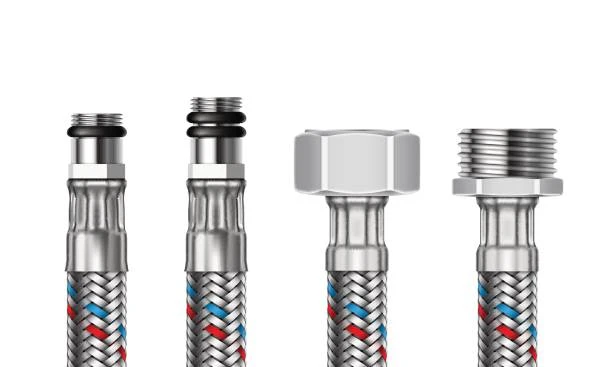
Braided hose pipes play an essential role across a wide range of everyday and industrial applications. Their flexibility, durability, and high-pressure resistance make them a practical choice for plumbing, machinery, and fluid transfer tasks. Whether used in a household washing machine or an industrial hydraulic system, these hoses deliver reliable performance while adapting to different working conditions. This article explores the key aspects of braided hose pipes, focusing on their practicality, usability, and real-world advantages. We’ll also answer common questions, define the product clearly, and examine where and how it’s typically used.
Frequently Asked Questions (FAQ)
1. What makes a braided hose pipe practical for daily use?
Its flexibility, pressure resistance, and ease of installation make it useful in both residential and industrial environments.
2. Can braided hose pipes handle hot and cold water?
Yes. Most are designed to withstand a wide range of temperatures, making them ideal for both hot and cold water systems.
3. Are they suitable for outdoor use?
Many braided hose pipes are UV-resistant and weatherproof, which makes them great for outdoor settings like irrigation and garden use.
4. Do they require any special maintenance?
Regular inspections are enough. Just check for kinks, leaks, or signs of wear. They generally require minimal maintenance.
5. Can I install a braided hose pipe myself?
Absolutely. Most types come with user-friendly fittings that connect easily to faucets, pumps, or appliances.
Definition and Key Features of Braided Hose Pipes
A braided hose pipe is a flexible conduit used to transport fluids, typically made with an inner tube covered by a braided reinforcement layer. The inner tube is usually made from materials like rubber, PVC, or silicone, while the outer braided layer is often composed of stainless steel or synthetic fiber.
What makes these hoses so practical is their structure. The braiding adds strength without compromising flexibility, which is essential for installations in tight or awkward spaces. Additionally, this design allows the hose to handle higher pressures and reduces the risk of kinking or bursting.
Key features include:
- Pressure Resistance: Braided construction improves burst resistance, ideal for high-pressure systems.
- Flexibility: Can bend and flex around corners without damage.
- Chemical Compatibility: Inner layers are resistant to a wide range of liquids and chemicals.
- Temperature Tolerance: Suitable for hot and cold environments, including heating systems.
- Long Lifespan: Durable materials extend service life even under constant use.
Because of these properties, braided hose pipes are often a better alternative to rigid piping or plain rubber hoses.
Common Applications and Industries
Due to their reliable performance and adaptability, braided hose pipes are used in various industries and settings. Here’s a closer look at where they are most practical:
1. Residential Plumbing
In homes, these hoses are frequently used to connect appliances such as washing machines, dishwashers, and water heaters. Their flexibility makes installation simple, even in tight laundry rooms or under sinks. Plus, their strength ensures fewer leaks and breakdowns.
2. Garden and Irrigation
Braided hose pipes are widely used in gardening because they combine durability with flexibility. They can be dragged across rough surfaces without damage, and many versions are resistant to UV rays and weather exposure.
3. Automotive and Mechanical Systems
In the automotive industry, braided hoses are essential for delivering oil, coolant, or fuel. Their heat and chemical resistance allow them to operate safely in engine compartments, where conditions can be extreme.
4. Industrial Equipment
Factories and workshops rely on braided hoses to transport air, steam, water, or chemicals between machines. Their high-pressure capabilities make them suitable for hydraulic systems and pneumatic tools.
5. Food and Beverage Industry
In food production, hygiene and safety are key. Braided hose pipes with FDA-approved inner linings are often used to move liquids, syrups, and cleaning fluids without contamination.
The Practical Advantages in Real Use
What sets braided hose pipes apart from other hose types is their all-around utility. They are easy to store, quick to install, and capable of withstanding wear and tear. Compared to rigid pipes or unreinforced hoses, they offer a better user experience and longer service life.
For instance, during maintenance or repairs, technicians often prefer braided hoses because they can be removed and replaced without cutting or welding. Their universal fittings also allow easy connections to valves, faucets, and nozzles. For businesses, this translates into reduced downtime and maintenance costs.
Moreover, braided hoses maintain their shape even under bending pressure, which minimizes flow disruption. Whether installed under a sink or inside an engine bay, they stay in position without needing additional support.
Summary
Braided hose pipes are among the most practical fluid transport tools available today. They combine strength, flexibility, and reliability in a way that few other hose types can match. Their braided construction provides protection without sacrificing maneuverability, making them perfect for everyday and professional use alike.
Whether you’re setting up a home water system or managing equipment in an industrial plant, choosing a braided hose pipe ensures performance and convenience. With minimal maintenance and wide application potential, they remain a smart and versatile solution across industries.
If you’re considering hose options for your next project, it’s worth giving braided hose pipes a closer look—they just might be the most practical choice you can make.
IFAN International Standards
To meet global quality demands, IFAN HDPE pipes follow a wide range of international standards, such as ASTM D3035, ISO 4427, EN 12201, and GB/T 13663. These standards define the pipe’s strength, durability, and safety. Moreover, IFAN complies with DIN 8074/8075, AS/NZS 4130, JIS K6760, BS 6572, and CSA B137.1, making their products suitable for water, gas, and industrial systems worldwide. Because IFAN meets all these trusted certifications, users can confidently choose IFAN for reliable performance in any environment.
Contact Us
If you have any questions about cold taps or need help selecting the right model, feel free to reach out to our team. We offer expert advice and support tailored to your industry and application.
IFAN is a Chinese manufacturer of plastic pipes, fittings and valves with 30 years of experience. If you are interest in IFAN copper fittings, copper valves, plastic pipes and fittings, please contact us. IFAN offers you a variety of standard pipes to meet your specific needs. Click below to learn more about IFAN’s wide range of affordable and cost-effective valve products and piping system related products.
We will reply your email or fax within 24 hours.
You can call us at any time if there is any question on our production.
For more information,pls visit our webside https://www.waterpipefactory.com/
Pls Mailto: [email protected]
Whatsapp: + 86 152 1588 7738